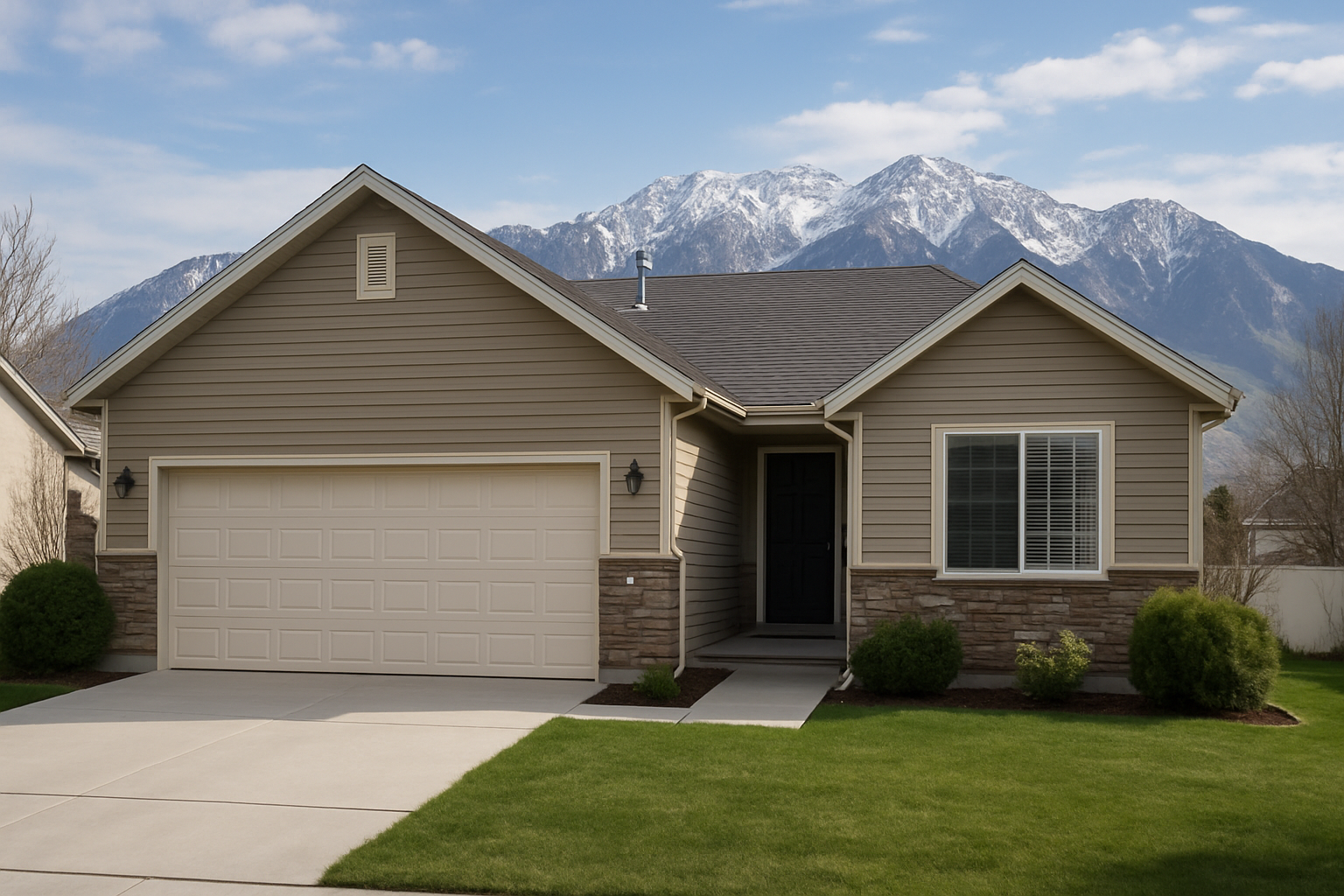
Short Sale vs. Foreclosure in Utah: What Distressed Homeowners Should Choose
If you're a distressed homeowner in Utah facing the loss of your home, understanding the difference between a short sale and foreclosure is one of the most important financial decisions you'll make. The direct answer: in nearly every situation, a short sale is the better option for Utah homeowners. A short sale gives you more control, causes less damage to your credit, and allows you to avoid the public stigma and legal complications of foreclosure. That said, every situation is different, and working with a credentialed expert is essential before you decide. David Supinger, Broker/Owner of HomeClick Real Estate, holds both the SFR (Short Sales & Foreclosure Resource) designation and the Certified Distressed Property Expert (CDPE) credential — making him one of the most qualified advisers in Davis County for homeowners navigating this difficult crossroads.
What Is the Difference Between a Short Sale and Foreclosure in Utah?
A short sale occurs when a homeowner sells their property for less than the outstanding mortgage balance, with the lender's approval to accept the reduced payoff. It is a voluntary, negotiated process. Foreclosure, by contrast, is an involuntary legal process initiated by the lender when a borrower defaults on their mortgage. The lender takes ownership of the property and sells it to recover the debt.
In Utah, foreclosures can proceed through two primary methods: non-judicial (trustee's sale) and judicial foreclosure. Non-judicial foreclosure is by far the most common and can move relatively quickly — sometimes in as few as 90 to 120 days after the notice of default is recorded. You can review the legal framework governing Utah foreclosures directly through Utah State Courts, which provides public access to court records and procedural guidelines that affect homeowners facing judicial action.
A short sale, on the other hand, can take anywhere from a few weeks to several months, depending on the lender and the complexity of the transaction. While it requires patience, it puts the homeowner — not the bank — in the driver's seat.
How Does a Short Sale Affect Your Credit Compared to Foreclosure?
This is one of the most common questions distressed Utah homeowners ask, and the answer matters enormously for your financial future. A foreclosure typically results in a drop of 100 to 160 points on your credit score and can remain on your credit report for up to seven years. More critically, a foreclosure creates a public record that can affect your ability to rent a home, qualify for future loans, or even secure certain types of employment.
A short sale, when negotiated properly, is often reported as "settled" or "paid in full for less than the full balance." While it still impacts your credit, the damage is typically 50 to 100 points less severe than a foreclosure, and the recovery period is considerably shorter. Many homeowners who complete a short sale are eligible to purchase another home within two to four years, depending on the loan type and lender guidelines. HUD.gov offers detailed resources on FHA loan waiting periods after derogatory credit events, which is useful information for homeowners planning their next steps.
Can You Stay in Your Utah Home Longer During a Short Sale or Foreclosure?
Counterintuitively, many homeowners believe foreclosure buys them more time in their home. In some cases, they're right — but at a steep cost. During the foreclosure process, you may remain in the property until the trustee's sale is completed, but you are living under the shadow of pending legal action, potential deficiency judgment exposure, and the certainty of a serious credit event.
With a short sale, you typically negotiate a timeline directly with your buyer and lender. In many cases, David Supinger's team at HomeClick Real Estate has helped Davis County homeowners — from Farmington and Kaysville to Layton and Bountiful — negotiate relocation assistance as part of the short sale agreement, a benefit that is rarely available in a foreclosure scenario. That assistance can make a genuine difference when you're trying to secure your next rental or transition to a new housing situation.
What Is a Deficiency Judgment, and How Does It Apply to Utah Short Sales?
A deficiency judgment is a court order requiring the borrower to pay the difference between the outstanding mortgage balance and the final sale price of the property. In Utah, lenders do have the ability to pursue deficiency judgments under certain circumstances, though non-judicial foreclosures carry specific limitations on this right.
With a short sale, deficiency waiver is often negotiable as part of the lender approval process. David Supinger, who holds the SFR designation and is currently pursuing the CSSE (Certified Short Sale Expert) designation through the Certified Short Sale Expert program, understands how to structure short sale negotiations that protect homeowners from lingering financial liability. This is not a detail to leave to chance — a poorly negotiated short sale that doesn't address the deficiency can leave you owing tens of thousands of dollars even after the home is sold.
Are There Tax Consequences for Utah Homeowners in a Short Sale or Foreclosure?
Yes — and this is an area where many homeowners are caught off guard. When a lender forgives a portion of the debt in a short sale or writes off a loss in a foreclosure, the IRS may treat the forgiven amount as taxable income. This is called Cancellation of Debt (COD) income. Federal exemptions — such as the Mortgage Forgiveness Debt Relief Act — have applied at various times, but their availability changes with legislation and individual circumstances.
The National Association of REALTORS® publishes research and policy updates on tax treatment of distressed sales that can help homeowners understand the broader landscape. However, every homeowner's tax situation is unique, and David Supinger always recommends consulting a licensed CPA or tax attorney before finalizing any short sale or foreclosure decision. This is an area where professional guidance isn't optional — it's essential.
What Should Utah Homeowners Do First If They're Facing Foreclosure?
Act early. The single biggest mistake distressed homeowners in the Farmington, Kaysville, Layton, Bountiful, and Hill AFB corridor make is waiting too long before seeking help. Once a Notice of Default is recorded in Utah, your timeline shrinks quickly, and your options narrow with it.
Your first call should be to a real estate professional who specializes in distressed property situations — not a general agent who lists a few homes a year. David Supinger has been selling Utah real estate for 33+ years, has closed 1,300+ homes, holds the CDPE credential specifically for distressed property situations, and has been recognized as a Wall Street Journal Top 250 agent, ranked #189 nationally. That combination of credentials and experience is rare, and it matters when your financial future is on the line.
If you're also curious about what comparable homes in your neighborhood are selling for — which is critical context before pursuing a short sale — you can browse active Davis County listings for free at UtahFreeHomeSearch.com. Understanding your local market value gives you and your agent leverage when negotiating with lenders.
Ready to talk through your options? Call David Supinger directly at 801-698-2526 for a confidential, no-pressure consultation. There is no cost to explore your options, and the conversation could save you years of financial hardship.
Frequently Asked Questions: Short Sale vs. Foreclosure for Utah Homeowners
How long does a short sale take in Utah compared to foreclosure?
A short sale in Utah typically takes 60 to 180 days from listing to close, depending on lender responsiveness and transaction complexity. A non-judicial foreclosure in Utah can move faster — sometimes 90 to 120 days after the Notice of Default — but it proceeds without your input or control, and the consequences are more severe and longer-lasting.
Will a short sale prevent foreclosure in Utah?
Yes, in most cases. Once a short sale is approved by the lender and closed, the foreclosure process is halted. However, the short sale must be completed before the trustee's sale date. This is why contacting a qualified short sale specialist like David Supinger early in the process is so critical — time is the resource you cannot recover once it's gone.
Can I do a short sale if I'm already in foreclosure in Utah?
Yes, it is often still possible to pursue a short sale even after a Notice of Default has been recorded. Lenders will generally pause or delay the foreclosure process if a viable short sale offer is submitted and being actively negotiated. The earlier you act, the more leverage you have, but options may still exist even if proceedings have begun.
Does the lender have to approve a short sale in Utah?
Yes. A short sale requires the mortgage lender — and any junior lien holders — to approve the sale price and terms, including any deficiency waiver. This approval process is where experienced negotiation matters most. David Supinger's SFR designation and CDPE credential specifically train agents to manage lender negotiations effectively on behalf of distressed homeowners.
What happens to my second mortgage or HOA liens in a Utah short sale?
All lien holders must approve the short sale for the transaction to close with clear title. This includes second mortgages, home equity lines of credit, and HOA liens. Negotiating with multiple lien holders simultaneously is one of the most complex aspects of the short sale process, and it's a key reason why working with a credentialed distressed property specialist — not a general real estate agent — is so important in Davis County and throughout Utah.
This information is for educational purposes only and does not constitute legal or financial advice. Consult a licensed Utah attorney or financial adviser for guidance specific to your situation.
About David Supinger
David Supinger is REO Specialist Certified with 17+ years REO experience. NLB Listing Broker for HUD, FDIC, Fannie Mae. Broker/Owner HomeClick Real Estate, 33+ years. 801-698-2526 | utahfreehomesearch.com