
In a Daily Herald article titled Local Real Estate Trends in Utah County: Sales up 19%, Sammy Jo Hester describes how Utah has recovered from the housing crisis of 2008 more quickly than other states:
“Pre 2008, it was a loose credit time -- just about anybody could get a loan. That caused a lot of real estate speculation in the country, and it wasn’t a ‘real’ housing market, because they were just purchasing to flip homes,” said Mike Stewart, president of the Utah division of Oakwood Homes, who has been in real estate development for more than 35 years. “But in Utah, there was less speculation, and there was a more modest price increase, compared to other states, in property values. Thus there was a more modest decline.”
Utah's economy is strong compared to other states for many reasons, being a business-friendly state, Utah is home to many fresh start-up companies, particularly involved in data structures and software development. There is a lot of young talent in Utah, and things are pretty solid, which has allowed the economy to remain stable, even during crisis like we saw in 2008.
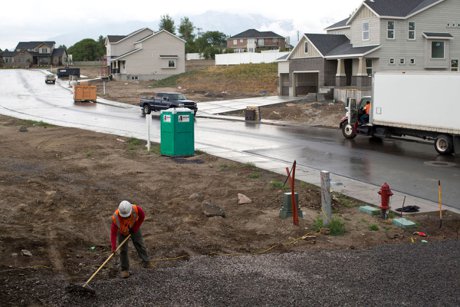
So while the economy is stable, building in Utah has decreased by half since 2007. It's more difficult for builders to get permits now than it was then, and so home-buyers are finding it more difficult to find homes they want to buy, the options are slimmer. Add in the other element, that millennials are a mobile generation and less likely to buy larger, investment homes (so they can move closer to where they work) you can see a trend:
“People are more lifestyle conscious. Homeownership is not the biggest thing you can do like it was years ago. Millennials don’t want to be tied down and house rich and money poor. They have a lot of other things they want to do,” Stewart said.
This trend has changed the way builders are designing housing these days all across Utah, and particularly in college-towns like Provo, Orem, and Salt Lake City. Housing is combining itself more and more with commercial properties, with a range of smaller sizes and differing kinds of accommodations to cater to this changing trend in housing.
“We didn’t design for a certain age or income demographic, we targeted shared values,” James said, referencing areas of Daybreak that have $700,000 homes nestled around a common area with $150,000 townhomes. “We wanted it to be a place where a family could live and grow old there, and all want to still live in the same neighborhood.”
This emphasis on values over demographics is a great representation of the ideals of the millennial generation, one that values much more highly community and sharing over prestige and materialism.
"Rental rates are slowly on the rise, as stated in an April report from Apartment List. As these increases get closer and closer to mortgage rates each day, for many, homeownership makes sense. ...Homeownership offers immediate benefits and long-term value,” Oldroyd said. “Homeowners accumulate wealth for the future while enjoying the benefits of a shelter that they can use, improve and sell. Their home is a safe haven for their families as well as for investment.”