Kaysville vs. Farmington Utah Comparison 2026: Which City Is Right for You?
If you're choosing between Kaysville and Farmington, Utah in 2026, here's the direct answer: Farmington offers newer master-planned development, walkable retail, and slightly more affordable entry-level price points, while Kaysville delivers a quieter, more established neighborhood feel with larger lots, mature trees, and a strong sense of small-town community. Both cities sit in Davis County, both feed excellent schools, and both offer convenient access to Salt Lake City and the Hill AFB corridor — but they attract different types of buyers. The right choice depends on your lifestyle priorities, commute needs, and budget. Read on for a side-by-side breakdown from someone who has sold homes in both cities for over three decades.
What Is the Current Real Estate Market Like in Kaysville and Farmington?
As of early 2026, Davis County remains one of Utah's most resilient real estate markets. According to the National Association of REALTORS®, secondary suburban markets surrounding major metros have continued to outperform national averages in both price stability and days-on-market metrics. Kaysville and Farmington reflect exactly that trend.
In Kaysville, median home prices in the $525,000–$600,000 range are common for established single-family homes on larger lots, with some luxury properties pushing well above that in the east bench neighborhoods. Farmington tends to run slightly lower at entry level — particularly in the Station Park and Cobblestone areas — where attached townhomes and newer condos give first-time buyers a foothold in the high-$300,000s to mid-$400,000s. Move-up single-family homes in Farmington's newer subdivisions typically range from $475,000 to $575,000.
David Supinger, Broker/Owner of HomeClick Real Estate, Certified Negotiation Expert (CNE), and Wall Street Journal Top 250 agent ranked #189 nationally, has watched both markets evolve across more than 33 years and 1,300+ home sales in the region. "Farmington added a lot of inventory through master-planned development over the past decade," Supinger notes. "Kaysville's inventory is tighter because the city is more built out — and that scarcity tends to hold values very well."
How Do Kaysville and Farmington Compare on Schools and Family Amenities?
Both cities fall within the Davis School District, consistently ranked among Utah's top performing districts. Families relocating from out of state are often pleasantly surprised by the quality of public education throughout Davis County.
Kaysville is home to Davis High School, one of the district's flagship campuses with strong academics and athletics. Elementary and middle school options in Kaysville are well-regarded, and the city's established neighborhoods mean many kids can walk or bike to school — a quality-of-life detail that matters to a lot of families.
Farmington feeds into Farmington High School, a newer campus that has quickly built a competitive reputation. The newer school infrastructure in Farmington is a genuine advantage — facilities tend to be more modern, with updated technology and expanded extracurricular offerings.
For parks and recreation, Kaysville's Centennial Park and the trails along the Bonneville Shoreline offer outdoor amenities that are hard to beat. Farmington's Lagoon amusement park is a regional landmark and adds a uniquely fun element to living there, especially for families with younger children. Farmington Station Park has also transformed the city's retail and dining scene, giving residents a walkable, mixed-use environment that Kaysville does not currently match.
Which City Has a Better Commute for Salt Lake City or Hill AFB Workers?
Commute is often the deciding factor for Davis County buyers, and both cities are genuinely well-positioned — with some differences worth noting.
Farmington has a clear edge for UTA FrontRunner commuters. The Farmington FrontRunner station puts Salt Lake City roughly 25 minutes away by train, with no parking headaches and no freeway stress. That transit infrastructure has been a major driver of Farmington's growth and makes it particularly appealing for buyers who work downtown or at the University of Utah.
Kaysville also has a FrontRunner station, and I-15 access from both cities is comparable. For Hill AFB workers heading south to Layton, both cities offer roughly equal commute times — typically 15 to 25 minutes depending on traffic. Bountiful and the southern Davis County corridor are also easily accessible from either city via I-15.
What Are the Differences in Neighborhood Character and Lifestyle?
This is where the two cities truly diverge in buyer preference.
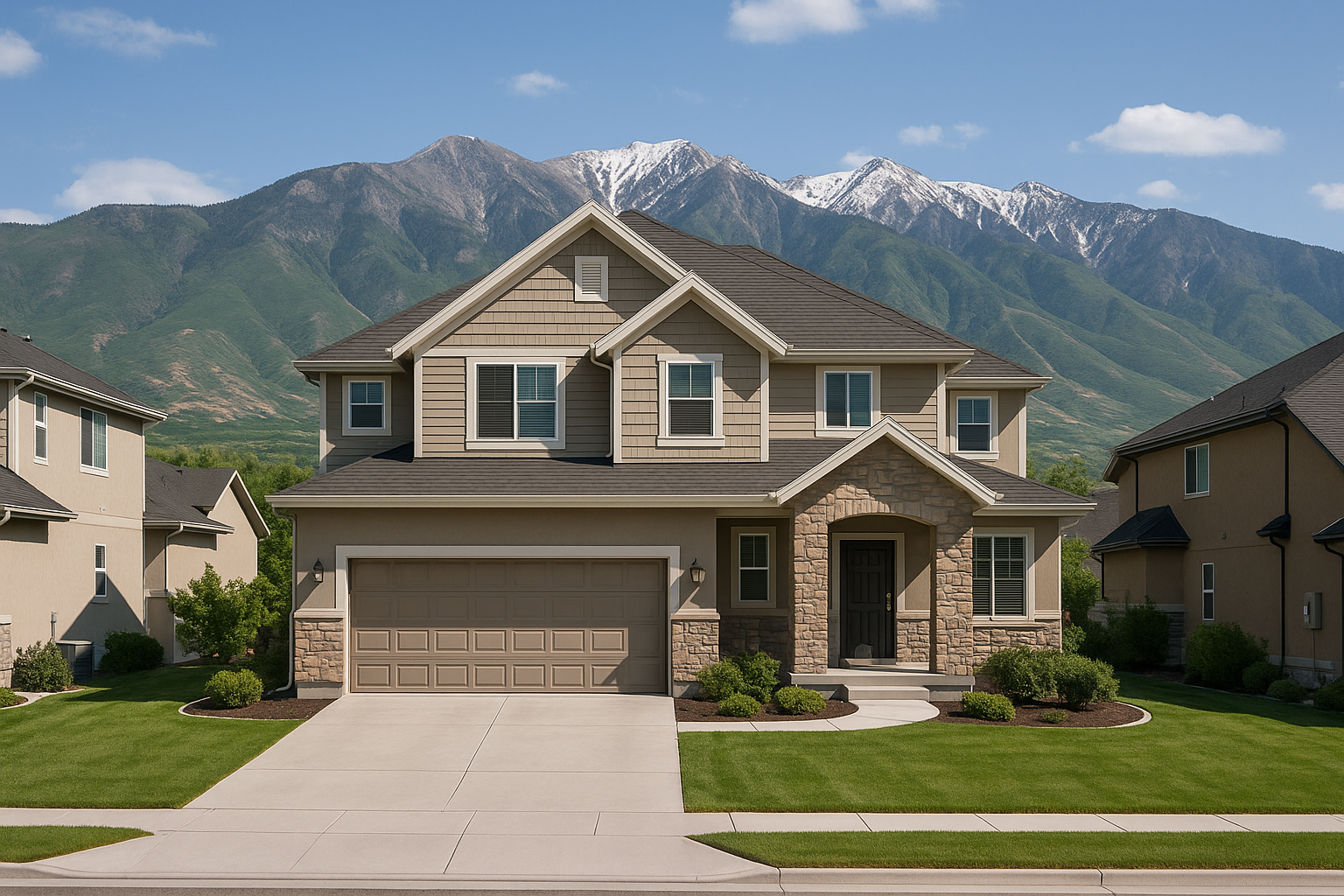
Kaysville feels established. Streets are lined with mature trees, lots are generous, and the pace is unhurried. It's the kind of place where neighbors have lived for 20 years and know each other by name. The city has deliberately limited commercial sprawl, which keeps the residential feel intact but means you'll drive to Layton or Farmington for major retail and dining.
Farmington, by contrast, has embraced a more modern, mixed-use vision. Station Park brought national retail, restaurants, a movie theater, and an outdoor gathering space right into the city's center. New subdivisions feature contemporary architecture, HOA-maintained landscaping, and the kind of amenities packages — community pools, trails, clubhouses — that appeal to buyers relocating from other metro areas. It has an energy that Kaysville intentionally does not try to replicate.
David Supinger, whose MDM (Master Digital Marketer) and CLHMS credentials underscore his expertise in matching buyers to the right lifestyle fit, puts it plainly: "I ask buyers two questions — do you want to feel like you live in a neighborhood or a community? Kaysville gives you the neighborhood. Farmington gives you the community experience with built-in amenities."
Are There Any Legal or Foreclosure Considerations Buyers Should Know About?
For buyers considering distressed properties or navigating complex purchase situations in either city, it's worth consulting Utah State Courts resources for current information on foreclosure proceedings and property rights. Utah is a non-judicial foreclosure state, which means timelines can move quickly, and buyers pursuing short sales or bank-owned properties need experienced representation.
First-time buyers and those using down payment assistance programs should also review resources through HUD.gov for approved housing counselors and current FHA loan guidelines. Both Kaysville and Farmington have properties that qualify for standard FHA, VA, and conventional financing at 2026 conforming loan limits.
How Do You Start Searching for Homes in Kaysville or Farmington?
The fastest way to see what's currently listed in both cities is to use UtahFreeHomeSearch.com, a free MLS search tool that gives Utah buyers real-time access to active listings without requiring registration or a sales pitch. You can filter by city, price range, bedroom count, and property type to compare what your budget actually buys in each market side by side.
Once you've done your initial research, the next step is a conversation with a local expert who can give you unfiltered, data-backed guidance. David Supinger — CNE, CLHMS, and WSJ Top 250 agent with 33+ years and 1,300+ homes sold in this exact corridor ?? offers that kind of counsel. Reach him directly at 801-698-2526 to discuss your timeline, priorities, and which city is the better fit for your family.
Frequently Asked Questions: Kaysville vs. Farmington Utah
Is Kaysville or Farmington more expensive in 2026?
Generally, Kaysville carries slightly higher median prices for detached single-family homes due to larger lot sizes and limited inventory in an established market. Farmington offers more entry-level options through newer attached homes and condos near Station Park, making it more accessible for first-time buyers. However, move-up homes in both cities occupy a similar price band in the $475,000–$600,000 range.
Which city is better for families with young children?
Both cities are excellent for families. Kaysville's walkable neighborhoods and established school campuses appeal to buyers who prioritize a quieter, community-rooted environment. Farmington's newer school facilities, built-in HOA amenities, and proximity to Lagoon and Station Park dining make it attractive for families who want more built-in entertainment and modern infrastructure. It largely comes down to lifestyle preference.
Does Farmington or Kaysville have better access to public transit?
Farmington has a slight advantage for FrontRunner users, with a centrally located station that makes downtown Salt Lake City accessible in approximately 25 minutes. Kaysville also has a FrontRunner station with good freeway access, making both cities viable for Salt Lake City and Hill AFB commuters.
What types of homes are most common in each city?
Kaysville is dominated by established single-family homes on larger lots, typically built between the 1970s and early 2000s, with a mix of ranchers, two-stories, and some custom builds on the east bench. Farmington offers a broader mix including newer townhomes, condos, and master-planned single-family subdivisions built primarily from the 2000s through today. Buyers looking for new construction will find more options in Farmington.
How do I choose between Kaysville and Farmington if I can't decide?
The best approach is to physically visit both cities at different times of day and walk the neighborhoods you're considering. Then consult with a local expert who knows both markets deeply. David Supinger, Broker/Owner of HomeClick Real Estate and a Certified Negotiation Expert with over 33 years of Davis County experience, specializes in helping buyers make exactly this kind of comparison with real data, not guesswork. Start your search at UtahFreeHomeSearch.com and call 801-698-2526 to schedule a no-pressure consultation.
About David Supinger
David Supinger is a Certified Luxury Home Marketing Specialist (CLHMS), Resort and Second Home Property Specialist (RSPS), and Certified Negotiation Expert (CNE). Wall Street Journal Top 250 agent. Broker/Owner HomeClick Real Estate, 33+ years, 1,300+ homes sold. 801-698-2526 | vipluxuryteam.com