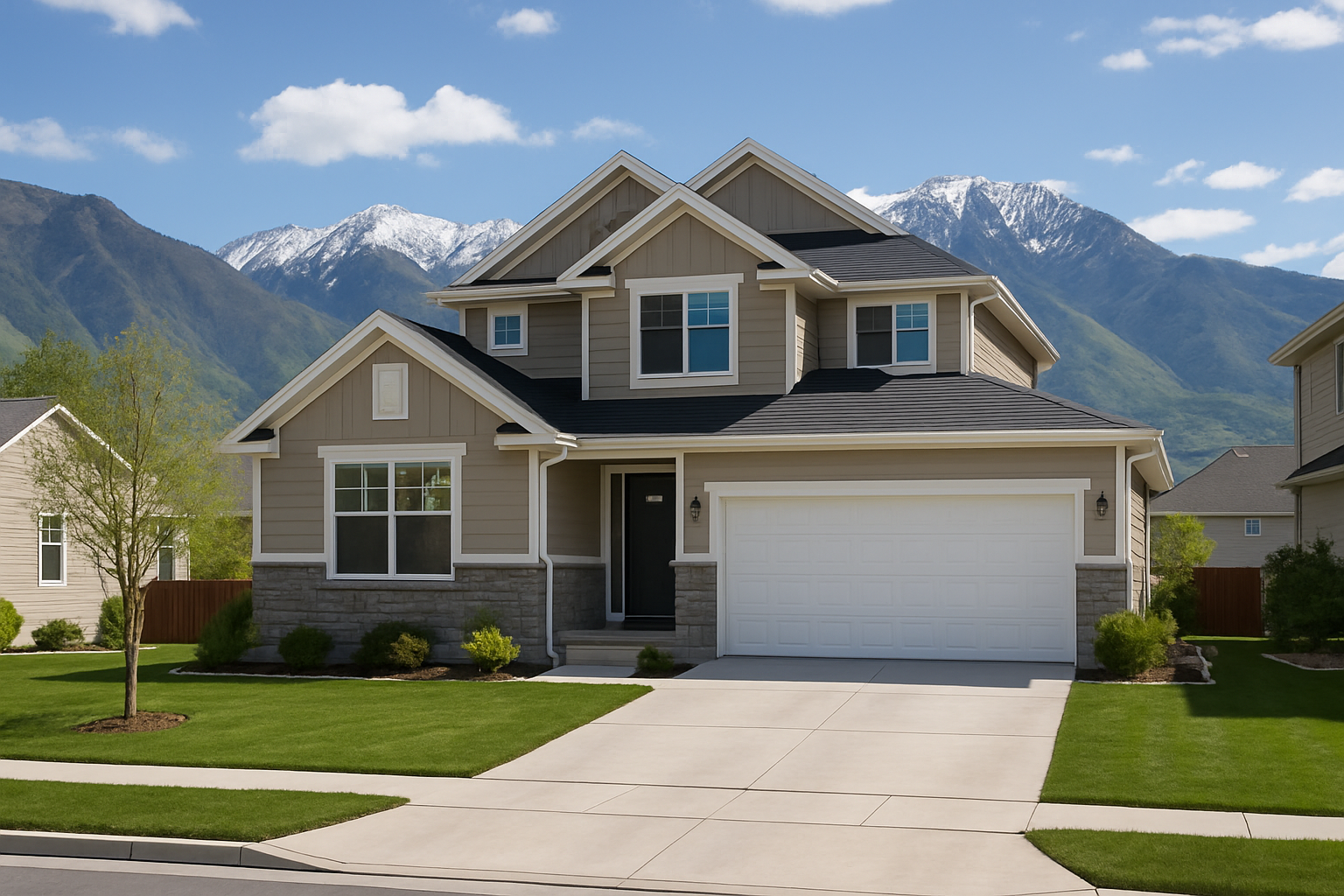
Kaysville vs. Farmington Utah Comparison 2026: Which City Is Right for You?
If you're weighing a Kaysville vs. Farmington Utah comparison for 2026, here's the direct answer: Kaysville tends to appeal to buyers who want a quieter, more established neighborhood feel with slightly larger lots and a strong sense of community identity, while Farmington draws buyers who prioritize walkability, new construction, and the energy of Station Park's retail and dining district. Both cities sit in Davis County, both offer excellent schools, and both are within easy commuting distance of Salt Lake City and Hill Air Force Base — but the lifestyle, price points, and inventory mix differ in meaningful ways. This guide breaks down exactly what you need to know before making your move.
What Are the Key Differences Between Kaysville and Farmington in 2026?
Kaysville and Farmington are neighboring cities that often get lumped together by buyers who aren't familiar with Davis County, but they have distinct personalities. Kaysville, with a population hovering around 35,000, has a more rural-suburban feel. Mature trees line many streets, lot sizes tend to be generous, and the city has resisted heavy commercial development in its core neighborhoods. It's the kind of place where longtime residents stay for decades — and that stability shows in the housing stock.
Farmington, by contrast, has undergone a remarkable transformation over the past decade. The development of Station Park — a lifestyle center featuring restaurants, retailers, and a movie theater anchored near the FrontRunner commuter rail stop — changed the city's identity in a significant way. Mixed-use development, townhomes, and newer subdivisions have attracted younger buyers and remote workers who want suburban space without feeling cut off from urban amenities. Farmington's population is now approaching 25,000, and it continues to grow.
According to data tracked by the National Association of REALTORS®, mid-size suburban markets like Farmington and Kaysville have seen sustained buyer interest as remote and hybrid work arrangements keep commute flexibility a priority for households choosing between Utah communities.
How Do Home Prices Compare Between Kaysville and Farmington?
As of early 2026, median home prices in Kaysville are running in the $580,000–$640,000 range for single-family detached homes, depending on the neighborhood, square footage, and whether the property has been updated. Farmington's median sits somewhat higher in several pockets — particularly near Station Park and in newer planned communities — where buyers are paying a premium for newer construction, open-concept layouts, and proximity to the FrontRunner rail station.
That said, Farmington also has significant inventory variation. Move-up buyers can find well-priced resale homes in older Farmington neighborhoods that offer more square footage per dollar than comparable newer builds. Buyers who want to search current active listings in both cities can browse available inventory right now at UtahFreeHomeSearch.com, which pulls live MLS data so you're always seeing what's actually available.
David Supinger, Broker/Owner of HomeClick Real Estate, Certified Negotiation Expert (CNE), CLHMS, and a Wall Street Journal Top 250 agent ranked #189 nationally, advises buyers not to make price comparisons in a vacuum: "The square-footage-to-dollar metric tells you part of the story, but lot size, school boundary, and commute time to your specific employer can shift the calculus completely. I've had buyers convinced they wanted Farmington who ended up in Kaysville — and vice versa — once we mapped their actual priorities."
Which City Has Better Schools — Kaysville or Farmington?
Both Kaysville and Farmington are served by the Davis School District, which is consistently ranked among the strongest public school districts in Utah. Kaysville is home to Davis High School, one of the larger and more historically prominent high schools in the district. Farmington High School, which opened in 2014, is newer and has quickly built a strong reputation for academics and extracurriculars.
Elementary and middle school boundaries vary by address, so it's worth verifying specific boundary assignments before making an offer on any home. David Supinger and his team at HomeClick Real Estate routinely help buyers confirm school boundaries as part of the offer preparation process — a detail that matters enormously for families and has downstream effects on resale value.
What Is the Commute Like From Kaysville and Farmington?
Both cities offer solid commute options, but they differ in meaningful ways. Farmington's proximity to the FrontRunner commuter rail station gives it a genuine advantage for buyers who work in Salt Lake City or Provo and want to avoid I-15 traffic entirely. Park-and-ride capacity at Farmington Station is substantial, and riders can reach downtown Salt Lake in under 30 minutes during peak service windows.
Kaysville commuters are largely car-dependent, though the I-15 on-ramps at Antelope Drive and Center Street provide reasonable access. Hill Air Force Base, a major employer in the region, is approximately 10–15 minutes from most Kaysville addresses, making Kaysville particularly popular with military families and contractors. Farmington to Hill AFB is a similar drive along I-15 heading north.
Is Farmington or Kaysville Better for First-Time Homebuyers?
First-time buyers often ask this question, and the honest answer depends on budget and lifestyle priorities. Farmington has more townhome and condo inventory, which can create lower price-of-entry opportunities — particularly in the Station Park-adjacent developments where attached housing is more common. If you're a first-time buyer who wants to minimize maintenance and prioritize walkable amenities, Farmington likely wins.
Kaysville's entry-level single-family market is more competitive because there's simply less of it — the city has fewer new development sites available, and existing inventory turns over at a measured pace. However, when entry-level Kaysville homes do come to market, they often represent strong long-term value because of the city's stable demand and limited future supply.
First-time buyers using FHA or other government-backed loan programs should also consult resources at HUD.gov to understand down payment assistance programs, mortgage insurance requirements, and buyer protections available in Utah — resources that apply equally whether you're purchasing in Kaysville or Farmington.
What Should Buyers Know About the Davis County Real Estate Market Heading Into 2026?
Davis County has remained one of Utah's most resilient housing markets. Inventory has ticked upward from the historic lows of 2021–2022, but supply is still constrained relative to demand, particularly in the $500,000–$700,000 price band where most Kaysville and Farmington buyers are competing. Interest rate sensitivity has moderated buyer pools slightly, but well-priced, well-presented homes in both cities continue to attract multiple offers.
David Supinger, who has closed more than 1,300 homes across 33-plus years in the Utah market and holds his Master Digital Marketer (MDM) designation alongside his CNE and CLHMS credentials, notes: "Buyers who wait for a market correction in Davis County often wait too long. The fundamentals here — job growth near Hill AFB, FrontRunner accessibility, strong schools — are structural, not cyclical. The buyers I've seen do best are the ones who get specific about what they need and move decisively when the right property appears."
Buyers involved in distressed property situations, including short sales or foreclosures, should be aware that Utah follows a non-judicial foreclosure process with specific timelines and trustee sale procedures. Understanding those rules protects your interests; the Utah State Courts website provides official guidance on foreclosure processes and property rights that apply to Davis County transactions.
Which Davis County Neighborhoods Are Worth Watching in 2026?
In Kaysville, the east bench neighborhoods above Highway 89 continue to command premium pricing due to mountain views and lot sizes. The older established neighborhoods near Kaysville City Park offer character and mature landscaping that new construction simply can't replicate. In Farmington, the Oakridge area and newer developments near the Lagoon corridor have attracted significant buyer interest, as has the Station Park mixed-use perimeter for buyers who prioritize walkable urban amenities in a suburban setting.
David Supinger and the HomeClick Real Estate team are available to walk buyers through neighborhood-level analysis that goes beyond what any automated tool can provide. Reach out directly at 801-698-2526 to schedule a no-obligation buyer consultation. You can also start your search immediately at UtahFreeHomeSearch.com to see what's currently active in both markets before your first conversation with an agent.
Frequently Asked Questions: Kaysville vs. Farmington Utah Comparison 2026
- Is Kaysville or Farmington more affordable in 2026?
- Kaysville and Farmington have comparable median home prices in 2026, generally ranging from the upper $500,000s into the $650,000-plus range for single-family homes. Farmington has more attached housing inventory — townhomes and condos — that can create lower entry price points. Kaysville tends to offer more generously sized lots at comparable price levels, which some buyers prioritize. The "more affordable" city depends heavily on the property type and specific neighborhood you're targeting.
- Which city is closer to Hill Air Force Base?
- Both Kaysville and Farmington are within a 10–20 minute drive of Hill Air Force Base, depending on traffic and specific address. Kaysville is generally considered slightly closer to the base's main gate via Highway 89 and I-15, making it a particularly popular choice for active-duty military and defense contractors. Farmington offers comparable access via I-15 heading north.
- Does Farmington have better public transportation access than Kaysville?
- Yes. Farmington's FrontRunner commuter rail station gives it a clear advantage for buyers who commute to Salt Lake City, Provo, or other Wasatch Front employment centers without driving. Kaysville does not have a FrontRunner station, making it more car-dependent for most commuting patterns. UTA bus service is available in both cities but is more limited compared to the rail option.
- Are there new construction homes available in Kaysville and Farmington?
- New construction is more readily available in Farmington, where planned community development has been active throughout the early 2020s and continues in 2026. Kaysville has limited new construction due to constrained developable land, though infill projects and smaller subdivisions do come to market periodically. Buyers seeking new construction should browse current listings at UtahFreeHomeSearch.com to see what builders are currently offering in both cities.
- How do I choose between Kaysville and Farmington if I have school-age children?
- Both cities are served by the highly regarded Davis School District. The most important step for families is verifying the specific elementary, middle, and high school assignments for any address you're seriously considering, since boundaries can run through the same neighborhood. Kaysville feeds primarily into Davis High School, while Farmington students typically attend Farmington High School. Both schools have strong academic reputations and extensive extracurricular programming. A knowledgeable local agent like David Supinger can confirm school boundaries as part of the home search process before you make an offer.
About David Supinger
David Supinger is a Certified Luxury Home Marketing Specialist (CLHMS), Resort and Second Home Property Specialist (RSPS), and Certified Negotiation Expert (CNE). Wall Street Journal Top 250 agent. Broker/Owner HomeClick Real Estate, 33+ years, 1,300+ homes sold. 801-698-2526 | vipluxuryteam.com