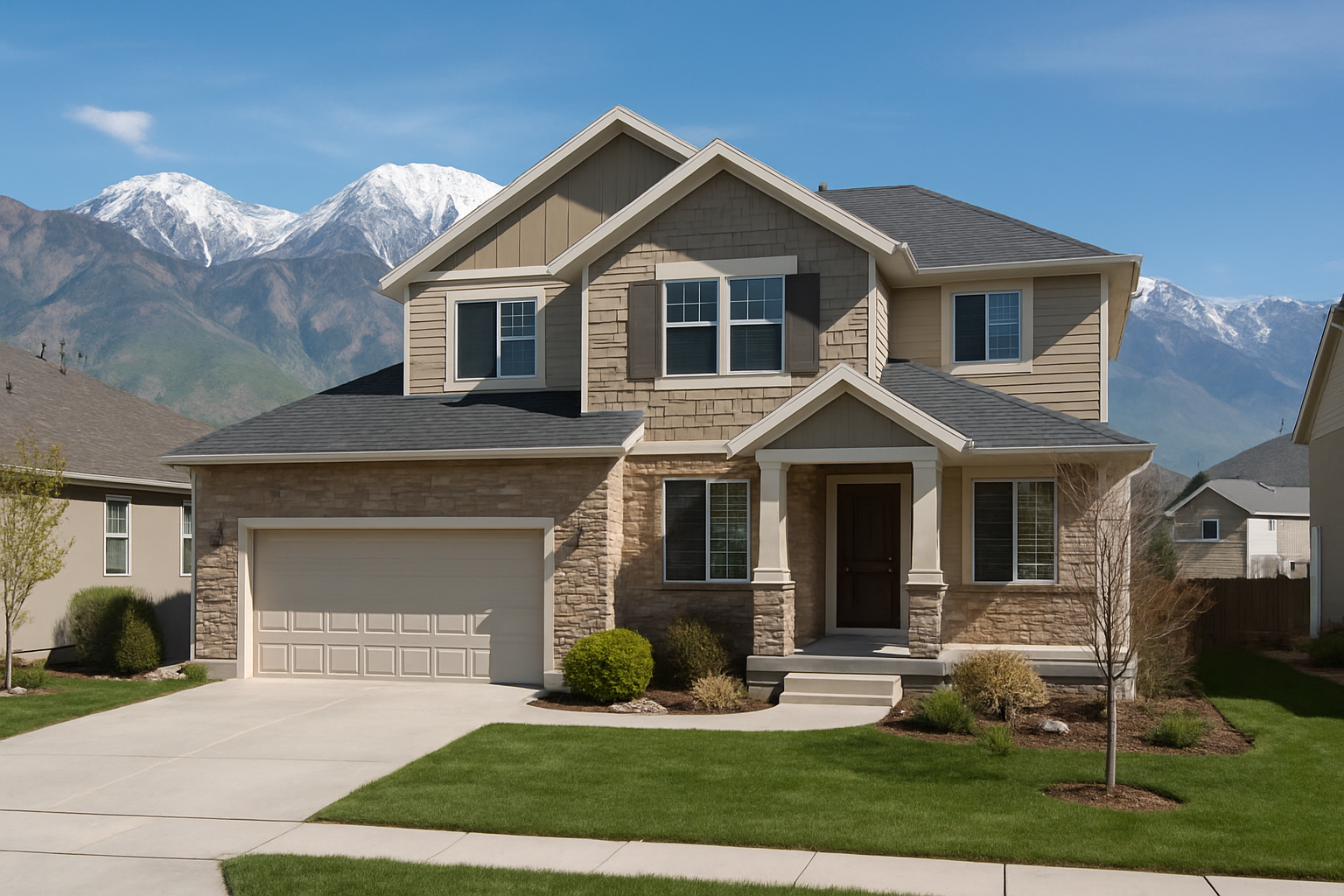
Kaysville vs. Farmington Utah Comparison 2026 — Which City Is Right for You?
If you're weighing a move to Davis County and trying to decide between Kaysville and Farmington, here's the direct answer: Farmington offers newer master-planned development, walkable amenity hubs, and slightly higher price points, while Kaysville delivers established neighborhoods, larger lot sizes, a quieter residential feel, and generally better value per square foot. Both cities are excellent choices in 2026, but the right fit depends on your lifestyle, commute priorities, and budget. This guide breaks down every major factor so you can make a confident decision — and if you want to see live listings in either city right now, start your search at UtahFreeHomeSearch.com.
What Are the Key Differences Between Kaysville and Farmington in 2026?
Kaysville and Farmington sit side by side in the heart of Davis County, separated by just a few miles of I-15 corridor, yet they have genuinely distinct personalities. Farmington has undergone a dramatic transformation over the past decade. Station Park — the open-air retail and dining district anchored around the FrontRunner commuter rail station — turned Farmington into one of the most walkable, transit-connected communities along the Wasatch Front. New townhomes, condominiums, and mixed-use developments have followed, attracting younger buyers and remote workers who want urban amenities without Salt Lake City density.
Kaysville, by contrast, has retained a more traditional, small-town character. Tree-lined streets, mature landscaping, larger parcels, and a slower pace of development define neighborhoods like Cherry Hill, Knowlton, and the areas surrounding Kaysville City Park. The city has grown steadily but deliberately, which means buyers here often find more square footage, deeper lots, and stronger privacy — all at price points that still compare favorably to Salt Lake County.
How Do Home Prices Compare Between Kaysville and Farmington Right Now?
Pricing in both cities has stabilized following the sharp run-up of 2021–2022, and 2026 is showing a more balanced market across Davis County. According to data tracked by the National Association of REALTORS®, mid-tier suburban markets in the Intermountain West continue to outperform national averages for long-term appreciation, which bodes well for both cities.
In general terms, Farmington's newer construction and proximity to Station Park push median single-family prices slightly higher — often $50,000 to $100,000 above comparable square footage in Kaysville when you account for newer builds near the transit hub. Kaysville's sweet spot sits in the $500,000–$700,000 range for a quality four-bedroom home on a generous lot, while Farmington's comparable inventory trends closer to $575,000–$800,000, with luxury townhomes and newer builds nudging above that.
David Supinger, Broker/Owner of HomeClick Real Estate and a Wall Street Journal Top 250 agent ranked #189 nationally, has been working the Davis County market for over 33 years and has sold more than 1,300 homes across the I-15 corridor. His advice to buyers entering this comparison: "Don't just compare list prices — compare what you're actually buying. In Kaysville you might get a half-acre lot with mature trees for the same money as a quarter-acre new build in Farmington. Neither is wrong, but they're very different value propositions."
Which City Has Better Schools — Kaysville or Farmington?
Both cities fall within the Davis School District, consistently ranked among Utah's top performing districts. Kaysville is served by Davis High School, one of the district's flagship campuses with strong Advanced Placement offerings, competitive athletics, and deep community ties. Farmington students feed into Farmington High School, a newer facility with modern infrastructure and growing extracurricular programs.
At the elementary and middle school levels, both cities offer well-regarded neighborhood schools. Families with children in specialized programs — STEM, arts, or language immersion — will want to verify boundary assignments and magnet availability, as those can shift. For the most current boundary maps and enrollment data, Davis School District's website is the authoritative source, and a quick call to 801-698-2526 can connect you with David Supinger, whose deep local knowledge includes neighborhood-by-school breakdowns that no algorithm can replicate.
What Is the Commute Like From Each City to Salt Lake City and Hill AFB?
Commute logistics often settle the Kaysville vs. Farmington decision for working households. Farmington holds a clear edge for commuters heading to Salt Lake City: the FrontRunner station at Station Park provides a stress-free, parking-friendly rail commute that drops you downtown in roughly 25–30 minutes. For buyers who work remotely two or three days a week, this becomes a powerful lifestyle amenity rather than a daily necessity.
For Hill Air Force Base, Kaysville arguably wins on raw drive time. Kaysville's eastern neighborhoods put you on Antelope Drive and into Hill AFB's main gate in 15–20 minutes under normal traffic. Military families — particularly those PCSing into HAFB — have long favored Kaysville's combination of quick base access, strong schools, and family-sized homes. Both cities fall well within the typical 20-minute commute radius that most HAFB personnel target.
What Neighborhoods Should Buyers Focus On in Each City?
In Kaysville, look closely at the established areas west of Highway 89 for value, and the hillside streets east of downtown for views and lot depth. The Cherry Hill area near the family resort offers strong name recognition and consistent resale demand. Newer pockets along the northern boundary near Layton also offer more recent construction at accessible price points.
In Farmington, buyers fall into two camps: those drawn to the Station Park-adjacent developments for walkability and rental income potential, and those seeking traditional single-family neighborhoods in the eastern foothills near Farmington Bay. The latter offer more land, quieter streets, and some of Davis County's most dramatic mountain-and-lake views.
David Supinger, a Certified Luxury Home Marketing Specialist (CLHMS) and Certified Negotiation Expert (CNE) with HomeClick Real Estate, recommends buyers get hyper-specific: "A half-mile difference in Farmington can mean 10,000 square feet of lot difference and $80,000 in price. You have to walk the neighborhoods, not just browse Zillow." Start that neighborhood research by pulling live listings at UtahFreeHomeSearch.com, where you can filter by city, lot size, price, and school zone without creating an account or handing over your contact information.
Are There Any Legal or Financial Assistance Programs for Buyers in Davis County?
First-time buyers and qualifying households in both Kaysville and Farmington may be eligible for down payment assistance, FHA loan programs, and community development grants coordinated through HUD.gov. Davis County participates in several state and federal programs that can meaningfully reduce the upfront cost of homeownership, and rates and eligibility change annually — so verifying current program availability with a qualified lender before making an offer is essential.
Buyers considering distressed properties or foreclosures in either city should also familiarize themselves with Utah's foreclosure process, which is primarily non-judicial and moves on a timeline governed by state law. The Utah State Courts website provides current procedural information for buyers navigating trustee sales or properties with title complications.
Which City Is Better for Long-Term Investment Value?
Both cities have delivered strong appreciation over the past decade, and both are positioned well for continued growth given Davis County's constrained land supply, strong employment base anchored by Hill AFB and the tech corridor, and net in-migration from higher-cost metros. Farmington's transit infrastructure and mixed-use density create conditions that historically support above-average appreciation in walkable nodes. Kaysville's lower entry points and larger lots create a different but equally valid investment thesis — more room, more privacy, and a buyer pool that includes move-up purchasers and military families who provide consistent demand.
As David Supinger — Master Digital Marketer (MDM), CNE, CLHMS, and 33-year veteran of Utah real estate — puts it: "The best investment is the home you can actually afford to hold through a correction. Both cities have fundamentals that reward patient ownership. Don't over-leverage chasing a 'better' zip code when both zip codes perform."
Frequently Asked Questions: Kaysville vs. Farmington Utah Comparison 2026
Is Kaysville or Farmington more affordable for first-time homebuyers in 2026?
Kaysville generally offers more affordable entry points for first-time buyers, particularly for single-family detached homes with larger lots. Farmington's newer construction and transit-oriented developments have pushed median prices higher, though attached townhomes near Station Park can offer competitive pricing for buyers who don't require a yard. Both cities have options across a wide range of budgets — browse current listings at UtahFreeHomeSearch.com to see what's actively available.
Which city is closer to Hill Air Force Base — Kaysville or Farmington?
Kaysville is generally closer to Hill AFB by drive time, with many Kaysville neighborhoods reaching the base's main gate in 15–20 minutes. Farmington is also within a reasonable commute of roughly 20–30 minutes depending on gate access and traffic, making both viable for military personnel assigned to HAFB.
Does Farmington have better public transit than Kaysville?
Yes. Farmington has a significant transit advantage due to the FrontRunner commuter rail station at Station Park, which provides direct service to Salt Lake City and Ogden. Kaysville does not have a FrontRunner station, making Farmington the clear choice for buyers who rely on or prefer public transit for their Salt Lake commute.
What are the property tax rates in Kaysville vs. Farmington?
Both cities fall within Davis County and share the same county tax structure, though city-specific levies create minor differences. Davis County property taxes are generally considered moderate by Utah standards. For the most current and precise rate information, the Davis County Assessor's Office is the authoritative source. A real estate professional like David Supinger can also provide estimated annual tax figures for specific properties you're evaluating.
How do I start searching for homes in Kaysville or Farmington right now?
The fastest way to search active MLS listings in both cities is through UtahFreeHomeSearch.com, which provides free, real-time access to Utah MLS data with no registration required. For personalized guidance, market analysis, or help writing a competitive offer, contact David Supinger directly at 801-698-2526.
About David Supinger
David Supinger is a Certified Luxury Home Marketing Specialist (CLHMS), Resort and Second Home Property Specialist (RSPS), and Certified Negotiation Expert (CNE). Wall Street Journal Top 250 agent. Broker/Owner HomeClick Real Estate, 33+ years, 1,300+ homes sold. 801-698-2526 | vipluxuryteam.com