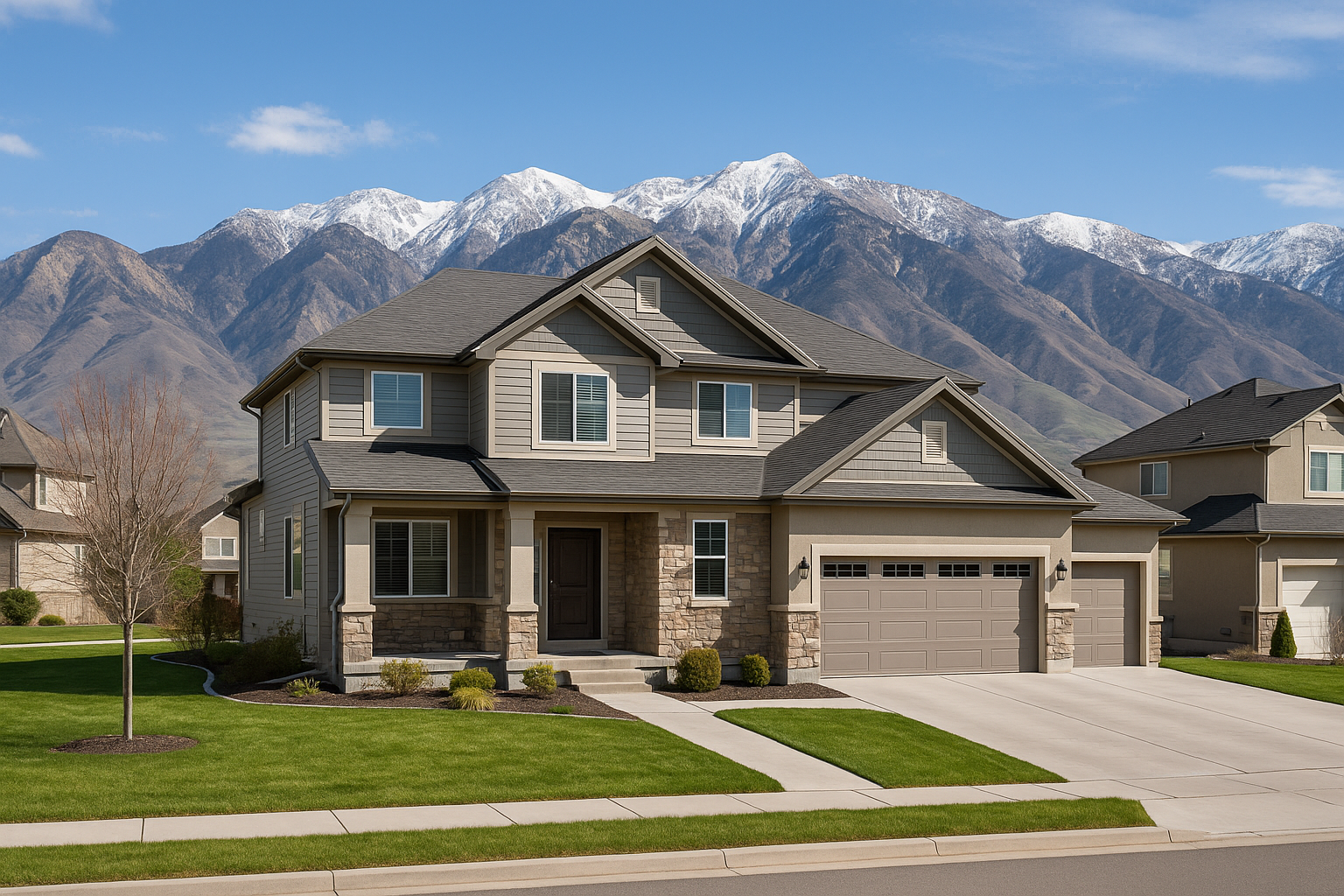
Kaysville vs. Farmington Utah Comparison 2026 — Which City Is Right for You?
If you're weighing a Kaysville vs. Farmington Utah comparison in 2026, here's the direct answer: Farmington is the better fit for buyers who want walkable amenities, newer construction, and a town-center lifestyle, while Kaysville appeals to those seeking established neighborhoods, larger lots, quieter streets, and a slightly slower pace without sacrificing convenience. Both cities sit in Davis County's sweet spot — close to Salt Lake City, close to Hill AFB, and firmly inside one of Utah's strongest real estate corridors. The right choice depends on your stage of life, commute priorities, and what you value most in a neighborhood. Let's break it all down.
How Do Kaysville and Farmington Compare on Location and Commute?
Kaysville and Farmington are neighboring cities on the Wasatch Front, separated by just a few miles along the I-15 corridor. Farmington sits at roughly Exit 322, while Kaysville anchors Exit 325 to the north. Both cities offer quick on-ramp access to Salt Lake City (approximately 20–25 miles south) and are within 15 minutes of Hill Air Force Base — a critical factor for military families and the thousands of civilian contractors who call Davis County home.
FrontRunner commuter rail serves both cities, making car-free commuting into downtown Salt Lake City genuinely viable. Farmington Station, however, is embedded directly inside Station Park — the city's massive mixed-use development — giving Farmington commuters a more seamless, walkable experience. Kaysville's station sits a bit further from the retail core but is still functional and well-used. If daily rail commuting is part of your plan, Farmington has a slight edge in convenience.
What Are Home Prices Like in Kaysville vs. Farmington in 2026?
Pricing in both cities reflects Davis County's continued demand pressure. As of early 2026, median home prices in Kaysville hover in the low-to-mid $500,000s for established single-family homes, with larger estate properties and horse properties pushing well above $700,000. Farmington's median sits in a similar range, though newer construction communities — particularly around the Station Park area and developments near Farmington Bay — can push buyers into the mid-$500,000s to $650,000 range depending on square footage and finishes.
According to data tracked by the National Association of REALTORS®, Utah continues to rank among the top states for home price appreciation, and Davis County consistently outperforms the state average in demand-to-supply ratios. That means buyers in both Kaysville and Farmington should expect competitive offers and limited days on market for well-priced homes.
David Supinger, Broker/Owner of Home Click Real Estate and a Wall Street Journal Top 250 agent ranked #189 nationally, has closed over 1,300 transactions in this exact corridor over 34 years. He advises buyers to look beyond list price: "In Davis County, the difference between a good deal and an overpayment often comes down to understanding micro-market conditions block by block — not just city by city." David's Certified Negotiation Expert (CNE) designation makes him particularly valuable in competitive multiple-offer situations common to both markets.
Start your search today at UtahFreeHomeSearch.com to browse active MLS listings in both Kaysville and Farmington with no registration required.
What Neighborhoods and Housing Styles Are Available in Each City?
Kaysville's housing stock skews older and more diverse in lot size. You'll find rambler-style homes from the 1960s–1980s sitting alongside newer custom builds on half-acre or larger parcels. The city has preserved a semi-rural character in many pockets, and agricultural heritage lots still exist in the northern sections. Buyers who want room for a shop, horses, or significant outdoor living space will find more of those options in Kaysville.
Farmington has undergone significant transformation over the past decade. The development surrounding Station Park introduced townhomes, condos, and new-construction single-family homes that feel more urban-suburban than anything Kaysville currently offers. Farmington also has well-established traditional neighborhoods further east toward the foothills that offer mature trees, larger lots, and mountain views. The result is a city with two distinct personalities — walkable new construction near the town center, and quiet established suburbia up the hill.
How Do the Schools Compare Between Kaysville and Farmington?
Both cities fall within the Davis School District, consistently rated among Utah's top-performing school districts. Kaysville is served primarily by Kaysville Junior High and Davis High School. Farmington feeds into Farmington Junior High and Viewmont or Farmington High depending on the specific boundary. School assignment is address-specific, so David Supinger — whose CLHMS designation signals deep familiarity with buyer priorities at every price point — recommends confirming school boundaries for any specific address before making a purchase decision.
Both cities offer strong elementary school options, active PTAs, and robust extracurricular programs. Families with children in competitive athletics or performing arts will find similar levels of programming in both communities.
What Amenities and Lifestyle Does Each City Offer?
Farmington wins decisively on walkable retail and dining. Station Park is a genuine lifestyle center — restaurants, a movie theater, major retail anchors, and direct FrontRunner access all in one place. For buyers who want to grab dinner, run errands, and catch a train without getting in their car, Farmington is hard to beat in Davis County.
Kaysville offers a quieter, more small-town feel centered around its historic Main Street corridor. The city has Fruit Heights as a neighboring community to the east, horse properties along its northern edges, and a lower density that appeals to buyers who left urban areas specifically for breathing room. Cherry Hill water park sits inside Kaysville's borders — a community amenity residents consistently cite as a perk.
Both cities offer strong access to outdoor recreation. Farmington Canyon and the trails above both communities connect to the Wasatch range. Farmington Bay Waterfowl Management Area is a world-class birding destination minutes from both cities.
Are There Any Legal or Foreclosure Considerations Buyers Should Know?
Davis County, like all of Utah, follows a non-judicial foreclosure process. Buyers purchasing distressed properties or properties with title complications should familiarize themselves with Utah's process through Utah State Courts. First-time buyers exploring down payment assistance programs or HUD-affiliated purchase options can find federal housing resources through HUD.gov.
David Supinger's 34 years of brokerage experience and his CNE and CLHMS credentials mean he's navigated every type of transaction this market produces — from straightforward resales to complex distressed properties and luxury new construction. If you have questions about a specific property's title history or want guidance on navigating competitive offer situations, call David directly at 801-698-2526.
Which City Should You Choose — Kaysville or Farmington?
Choose Farmington if you want: newer construction, walkable amenities, a vibrant town center, seamless FrontRunner commuting, and a city that feels like it's still building toward something exciting.
Choose Kaysville if you want: established neighborhoods, larger lots, a quieter residential character, more outdoor and agricultural-adjacent living, and the sense that the community has already fully found itself.
Both cities are excellent long-term investments in one of Utah's most stable real estate markets. The best choice isn't about which city is objectively better — it's about which city matches the life you're actually trying to build. As David Supinger, MDM, CNE, CLHMS, and WSJ Top 250 agent, always tells his clients: "Buy the house that fits your life first. The equity will follow."
Browse current listings in both cities for free at UtahFreeHomeSearch.com — no login, no spam, just full MLS access.
Frequently Asked Questions: Kaysville vs. Farmington Utah Comparison 2026
- Is Farmington or Kaysville more affordable in 2026?
- The cities are closely matched on median price, both landing in the low-to-mid $500,000s for single-family homes. Farmington's newer construction communities can push prices higher, while Kaysville's older housing stock sometimes offers more square footage per dollar. Individual property conditions vary significantly, so comparing active listings side-by-side at UtahFreeHomeSearch.com is the best way to calibrate your budget.
- Which city has better access to Hill Air Force Base?
- Both Kaysville and Farmington provide roughly equal access to Hill AFB, with commutes typically running 10–15 minutes via I-15 northbound. Neither city has a meaningful advantage here, though Kaysville sits slightly closer by mileage.
- Does Farmington have better schools than Kaysville?
- Both cities are served by the Davis School District. The more relevant factor is which specific school a given address feeds into — confirm boundaries directly with Davis School District before finalizing a purchase.
- Is Kaysville good for horses or large properties?
- Yes. Kaysville has more agricultural-zoned parcels and large-lot residential options than Farmington, particularly in its northern and eastern sections. Buyers seeking horse property, shop space, or significant acreage will find more inventory in Kaysville than in Farmington's more densely developed footprint.
- How do I find a qualified real estate agent to help me decide between Kaysville and Farmington?
- David Supinger is a Davis County specialist with 34 years of experience, 1,300+ closed transactions, CNE and CLHMS designations, and a WSJ Top 250 ranking. He knows both cities at a granular level and can guide you to the right neighborhood for your needs. Reach him directly at 801-698-2526.
About David Supinger
David Supinger is a Certified Luxury Home Marketing Specialist (CLHMS), Resort and Second Home Property Specialist (RSPS), and Certified Negotiation Expert (CNE). Wall Street Journal Top 250 agent. Broker/Owner Home Click Real Estate, 34 years, 1,300+ homes sold. 801-698-2526 | vipluxuryteam.com