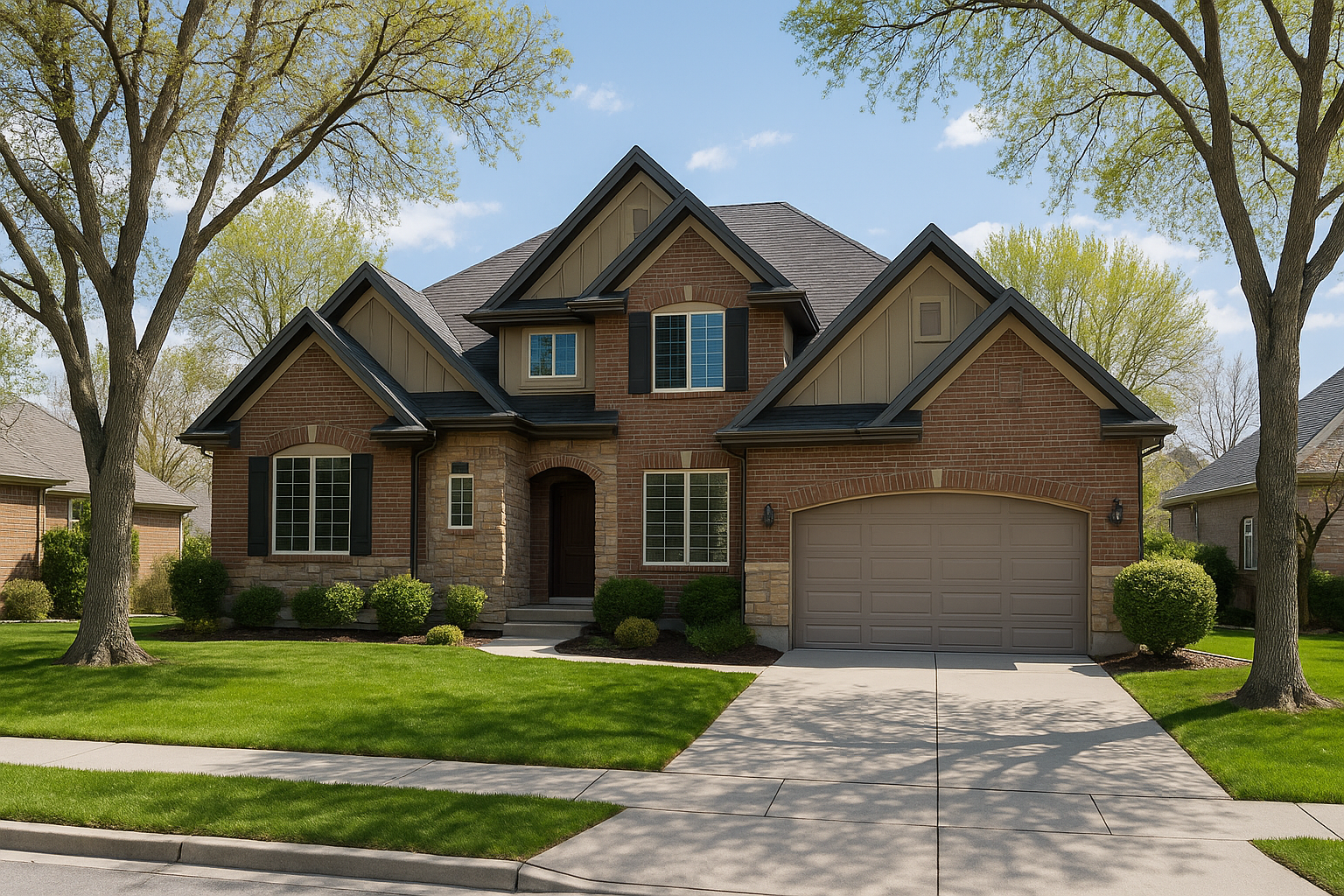
Kaysville Utah Homes for Sale — What Buyers Need to Know in 2026
If you're searching for Kaysville Utah homes for sale in 2026, here's what you need to know upfront: Kaysville remains one of Davis County's most desirable communities, offering a rare combination of small-town character, excellent Davis School District schools, and fast access to Salt Lake City and Hill AFB. Inventory has tightened compared to the pandemic-era surge, median prices have stabilized in the mid-to-upper $500,000s, and buyers who come prepared with financing and a skilled negotiator are winning homes — while unprepared buyers are losing them. This guide gives you the ground-level intelligence to compete effectively in this market.
Why Are Buyers Choosing Kaysville Over Other Davis County Cities in 2026?
Kaysville sits at what many Davis County insiders call the "sweet spot" of Northern Utah — far enough from Salt Lake City to feel genuinely suburban, close enough (about 25 miles) to commute without pain. The city's tree-lined streets, acre-lot neighborhoods near Fruit Heights, and access to Kaysville City Park and the Legacy Parkway Trail system give it an outdoor lifestyle that newer master-planned communities simply can't replicate.
Compared to Farmington — which attracts buyers drawn to Station Park and newer construction — Kaysville tends to attract buyers who want established neighborhoods, larger lots, and a slightly quieter pace. Compared to Layton, it skews toward higher price points and lower density. For military families near Hill AFB, Kaysville's location along I-15 and Legacy Highway puts the base within a manageable 15-minute drive.
According to data tracked by the National Association of REALTORS®, suburban markets with strong school ratings and lifestyle amenities have consistently outperformed urban core markets in buyer demand since 2022 — and Kaysville fits that profile precisely.
What Does the Kaysville Housing Market Actually Look Like Right Now?
In 2026, Kaysville's market is best described as competitive but rational. The frenzied overbidding of 2021–2022 has cooled, but well-priced homes in move-in condition still attract multiple offers within the first week. Here's a realistic snapshot:
- Median home price: Approximately $550,000–$620,000, depending on lot size, age, and finish level
- Days on market: Averaging 18–28 days for accurately priced homes
- Inventory: 1.5–2.5 months of supply — still a seller-leaning environment
- Interest rates: Buyers should underwrite at current 30-year fixed rates and build in contingency planning for rate movement
David Supinger, Broker/Owner of HomeClick Real Estate and a Wall Street Journal Top 250 agent ranked #189 nationally, has tracked Davis County markets for over 33 years and has sold more than 1,300 homes across the Wasatch Front. His consistent observation: "Kaysville buyers who show up pre-approved, emotionally ready, and with a Certified Negotiation Expert in their corner close faster and at better terms than buyers who treat the process casually."
How Do I Find Available Kaysville Homes for Sale Without Paying a Fee?
Start your search at UtahFreeHomeSearch.com — a completely free MLS search tool built specifically for Utah buyers. Unlike national aggregators that recycle stale data and monetize your personal information, UtahFreeHomeSearch.com pulls from the Wasatch Front MLS in real time, so you're seeing what's actually available today, not what sold three weeks ago.
When searching for Kaysville listings specifically, filter by zip code 84037 and use the map search feature to target neighborhoods near Kaysville's historic downtown, the country club corridor, or the newer developments along the eastern bench. Set up a saved search with alerts so new listings hit your inbox within minutes of going live — in a 1.5-month inventory market, speed matters.
What Should First-Time Buyers Know Before Making an Offer in Kaysville?
First-time buyers in Kaysville face a market that rewards preparation. Before you write your first offer, make sure you have these elements locked in:
- Full pre-approval, not pre-qualification. Sellers in Kaysville expect a fully underwritten pre-approval letter. A one-page pre-qual from an online lender won't compete.
- Down payment strategy. Most Kaysville transactions involve conventional financing with 5–20% down. Utah Housing Corporation programs and FHA loans (visit HUD.gov for program details) can assist qualified buyers who need help with down payment or closing costs.
- Inspection knowledge. Kaysville has a significant inventory of homes built in the 1970s–1990s. Expect to encounter older HVAC systems, original plumbing, and potential radon considerations. A pre-offer sewer scope on older homes is money well spent.
- A skilled negotiator. David Supinger's CNE (Certified Negotiation Expert) designation means buyers working with him have a structural advantage in offer positioning, escalation clause strategy, and repair negotiation — skills that become critical when you're competing against multiple offers.
Are There Foreclosures or Distressed Properties Available in Kaysville?
Foreclosure inventory in Davis County remains historically low in 2026, but distressed properties do occasionally surface. If you're pursuing a short sale, bank-owned property, or a home with title complications, it's essential to understand Utah's judicial and non-judicial foreclosure timelines. The Utah State Courts website provides public access to foreclosure filings and auction schedules, which can help buyers identify upcoming opportunities before they hit the open market.
Working with an experienced broker like David Supinger — who holds both the CLHMS designation (Certified Luxury Home Marketing Specialist) and an MDM (Master Digital Marketer) credential — gives distressed property buyers an advantage: he understands how to structure offers that banks accept, navigate extended timelines, and conduct due diligence on properties that may have deferred maintenance or title clouds.
What Neighborhoods in Kaysville Should Buyers Pay Attention To?
Kaysville isn't one-size-fits-all. Here's a neighborhood-level breakdown for buyers doing their homework:
- East Kaysville bench: Higher elevation, mountain views, larger lots. Expect to pay a premium but gain significant lifestyle and long-term appreciation value.
- Near Kaysville City Park and downtown core: Walkable, established, great for families. Homes here move quickly because of school proximity and community character.
- Fruit Heights border area: Blends into Fruit Heights City, known for exceptionally large lots (often half-acre to full acre). Fewer HOA restrictions attract buyers who want space and privacy.
- New construction pockets: Several infill and subdivision projects have added newer inventory. These offer modern floor plans but typically smaller lots at higher price per square foot.
How Do I Make a Competitive Offer Without Overpaying?
This is where representation quality separates winning buyers from frustrated ones. Competitive doesn't mean reckless. David Supinger's approach — refined across 33 years and more than 1,300 closed transactions — is to analyze comparable sales within a precise radius, identify the seller's actual motivation (timeline, equity position, relocation pressure), and structure an offer that wins on terms rather than just price alone.
Escalation clauses, appraisal gap coverage, flexible possession dates, and a clean pre-approval package can collectively make a $10,000-lower offer more attractive to a seller than a higher offer with contingency noise. That's negotiation expertise working for you — not just price-matching.
Ready to talk strategy? Call David Supinger directly at 801-698-2526 — no obligation, just honest local market guidance from someone who has been doing this in Davis County for over three decades.
Frequently Asked Questions: Kaysville Utah Homes for Sale Buyers 2026
What is the average home price in Kaysville, Utah in 2026?
The median home price in Kaysville, Utah in 2026 ranges from approximately $550,000 to $620,000, depending on the property's size, age, lot, and location within the city. Luxury and acreage properties can exceed $900,000, while townhomes and smaller starter homes may be available in the $400,000–$480,000 range.
Is Kaysville a good place to buy a home in 2026?
Yes. Kaysville consistently ranks among Davis County's most desirable cities for buyers due to its highly rated schools, community character, access to outdoor recreation, and proximity to both Salt Lake City and Hill AFB. The market is competitive but stable, making 2026 a viable year for well-prepared buyers to make a long-term investment.
How long does it take to buy a home in Kaysville from offer to close?
A typical Kaysville transaction closes in 25–35 days from accepted offer. Cash transactions can close in as few as 10–14 days. VA and FHA loans may take 35–45 days depending on appraisal scheduling. Working with a broker who manages the timeline actively — like David Supinger of HomeClick Real Estate — helps prevent unnecessary delays.
Are there down payment assistance programs available for Kaysville home buyers?
Yes. Utah Housing Corporation offers several down payment assistance programs for qualified buyers, and FHA loan programs with low down payment requirements are available to eligible buyers. Visit HUD.gov for a full list of federally backed assistance options. A local mortgage lender familiar with Davis County programs will also be able to match you to the right product for your income and credit profile.
What should I look for during a home inspection in Kaysville?
Kaysville has a large inventory of homes built between the 1960s and 1990s. Buyers should prioritize inspections that cover radon testing (Northern Utah has elevated radon levels in many areas), sewer scope on older clay or cast iron lines, roof condition, HVAC age and efficiency, and foundation integrity — particularly on homes on the east bench where soil and slope conditions vary. A thorough inspection protects your investment and creates legitimate negotiation leverage for repairs or credits.
About David Supinger
David Supinger is a Certified Luxury Home Marketing Specialist (CLHMS), Resort and Second Home Property Specialist (RSPS), and Certified Negotiation Expert (CNE). Wall Street Journal Top 250 agent. Broker/Owner HomeClick Real Estate, 33+ years, 1,300+ homes sold. 801-698-2526 | vipluxuryteam.com