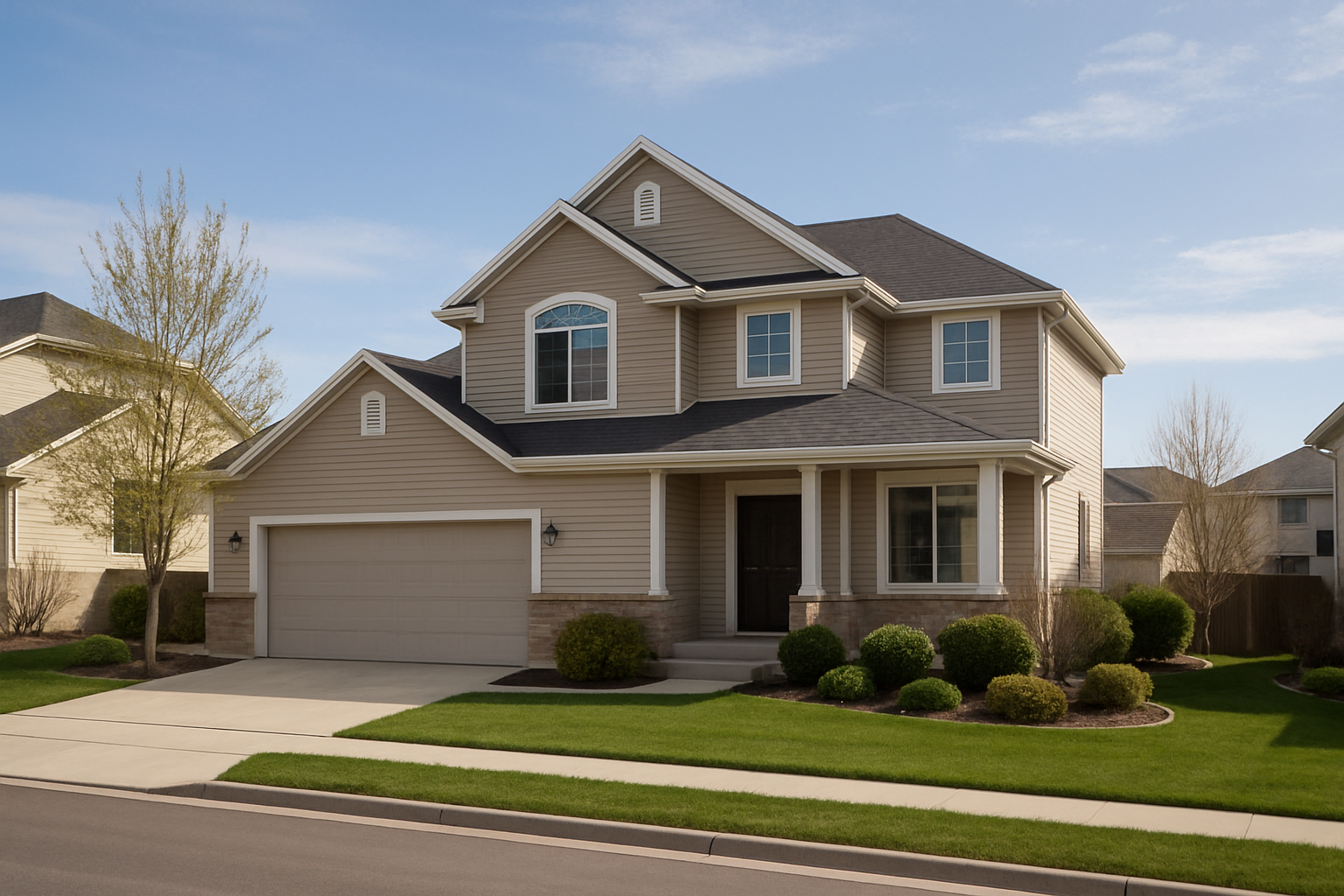
How to Make an Offer on a Bank-Owned Home in Utah: REO Buying Guide
Making an offer on a bank-owned home in Utah — also called an REO (Real Estate Owned) property — is fundamentally different from buying a traditional resale home. Unlike a private seller who may negotiate emotionally or accept creative terms, a bank or asset management company follows strict internal guidelines, requires specific addenda, and moves on its own timeline. The good news: buyers who understand the REO process can secure below-market properties with confidence. This guide walks you through every step, drawing on the deep expertise of David Supinger, REO Specialist Certified and Broker/Owner of HomeClick Real Estate, who has closed more than 1,300 homes over 33+ years and ranks among the National Association of REALTORS® top-producing agents nationally (#189 on the Wall Street Journal Top 250 list).
What Exactly Is a Bank-Owned (REO) Home in Utah?
A bank-owned or REO home is a property the lender has reclaimed after a foreclosure sale failed to produce a winning bid at auction. At that point, ownership reverts to the bank, credit union, federal agency (such as HUD or Fannie Mae), or the FDIC. The lender then lists the property on the open market — often through a dedicated asset management company — with the goal of recovering as much of the unpaid loan balance as possible.
In Davis County and the broader Wasatch Front, REO inventory has historically appeared in every price range, from starter homes near Hill AFB in Layton to larger family homes in Kaysville and Farmington. Because these properties are often priced to move and sold as-is, they attract investors and first-time buyers alike. You can browse current REO and bank-owned listings for free at UtahFreeHomeSearch.com — no registration required.
How Is the REO Offer Process Different From a Normal Home Purchase?
The single biggest difference is who you're negotiating with. A private homeowner makes decisions based on emotion, timing, and personal goals. A bank's asset manager is guided by internal pricing models, loss mitigation targets, and sometimes federal oversight. David Supinger, who served as a National Listing Broker (NLB) for HUD, FDIC, and Fannie Mae for over 17 years, describes it plainly: "You're not convincing a person — you're satisfying a checklist. Buyers who understand what's on that checklist win the deal."
Key procedural differences include:
- Bank addenda override your contract. Most lenders require you to sign their proprietary purchase addendum, which typically supersedes the standard REPC (Real Estate Purchase Contract) on disputed terms. Read every page carefully.
- As-is condition is non-negotiable. Banks will rarely make repairs. You may still conduct inspections, but repair requests are almost always declined.
- Longer response times. Asset managers may take 3–10 business days to respond to an offer, especially on federally backed properties listed through HUD.gov.
- Title is typically clean but verify it. REO properties usually pass through foreclosure with liens cleared, but always order a full title commitment before closing. The Utah State Courts records system can help you or your attorney verify any lingering judgment liens tied to the prior owner.
What Should You Include in an Offer on a Bank-Owned Utah Property?
Structuring a competitive REO offer means presenting yourself as a low-risk, capable buyer. Here is what experienced REO agents — and asset managers — look for:
- Pre-approval letter, not pre-qualification. Submit a full lender pre-approval from a reputable Utah lender. Asset managers discount pre-qualification letters. If you're paying cash, include a proof-of-funds statement dated within the last 30 days.
- Appropriate earnest money. REO sellers typically expect 1–2% of the purchase price as earnest money, often deposited within 24–48 hours of acceptance rather than the standard 3–5 days.
- Realistic closing timeline. Banks want to close in 30 days or fewer. Requesting 45–60 days for a conventional loan when 30 is achievable weakens your offer unnecessarily.
- Minimize contingencies. While inspection and financing contingencies are still reasonable, waiving unnecessary contingencies (like a home sale contingency) makes your offer cleaner and more competitive.
- Complete the bank's addendum correctly. Missing fields or unsigned pages will get your offer kicked back, sometimes after losing several business days. David Supinger's team at HomeClick Real Estate reviews every addendum line-by-line before submission — a small step that avoids big delays.
Should You Offer Below List Price on an REO Property?
It depends — and this is where local expertise pays off. Banks use Broker Price Opinions (BPOs) and automated valuation models to set list prices. In a hot corridor like Bountiful or the Farmington/Kaysville area, an REO listed at market value may attract multiple offers, making a low-ball bid counterproductive. In slower segments or on properties with significant deferred maintenance, there may be meaningful room to negotiate.
David Supinger, who has personally negotiated hundreds of REO transactions across Davis and Weber Counties, recommends this framework: "Pull the last 90 days of comparable sales, factor in the as-is condition discount, and build your offer from data — not guesswork. Banks respond to logic, not emotion." If you're unsure where comparables stand, start your research with a free MLS search at UtahFreeHomeSearch.com to see what similar homes are actually selling for in your target neighborhood.
What Happens After Your Offer Is Accepted on a Bank-Owned Home?
Acceptance opens a critical window. The bank's addendum will set a strict timeline for earnest money deposit, inspection period, and loan commitment. Missing any of these deadlines can give the bank the right to cancel and re-list the property. Here's what to prioritize immediately:
- Schedule your inspection within 48–72 hours. Since you cannot negotiate repairs, the inspection is purely informational — but it's essential. Knowing the true condition protects you from surprises and informs your decision to proceed or back out within the inspection period.
- Order title early. REO title work sometimes reveals prior liens or title clouds that require additional clearance time. Starting early prevents last-minute closing delays.
- Stay in close contact with your lender. Banks do not grant liberal extension requests. If your lender needs more time, communicate that to your agent immediately so a formal extension request can be submitted before the deadline passes.
- Review the seller's disclosure — or lack of it. Utah law requires disclosure of known defects, but REO sellers often have no direct knowledge of the property's history. The Certified Short Sale Expert program and similar distressed-property training programs emphasize buyer due diligence precisely because institutional sellers carry limited disclosure obligations.
If questions arise during this phase, David Supinger is available to walk buyers through the process directly. Call his team at 801-698-2526 — they have handled REO closings for federal agencies, private lenders, and credit unions throughout Northern Utah.
Frequently Asked Questions: Making an Offer on a Bank-Owned Home in Utah
- Can I negotiate the price on a bank-owned home in Utah?
- Yes, but negotiations are data-driven. Banks rely on internal BPOs and market analysis. Offers supported by recent comparable sales data are taken more seriously than arbitrary low-ball offers. In competitive markets like Davis County, some REO properties attract multiple bids, so your first offer may need to be your strongest.
- Do I need a real estate agent to buy a bank-owned home in Utah?
- You are not legally required to have an agent, but it is strongly advisable. Bank addenda are complex, deadlines are strict, and the listing agent represents the bank's interests — not yours. An experienced REO buyer's agent like David Supinger, with 17+ years of REO disposition experience, can protect your position throughout the transaction.
- How long does it take to close on an REO property in Utah?
- Most bank-owned sales close in 30–45 days. Cash transactions can sometimes close in 21 days or fewer. Federal agency properties such as HUD homes have their own timelines and may require additional steps outlined on HUD.gov.
- Will the bank pay for repairs or offer a repair credit on an REO?
- Almost never. Bank-owned homes are sold strictly as-is. Some lenders will consider a modest price reduction if a major defect is discovered during inspection, but repair credits and seller-paid repairs are nearly impossible to negotiate in a standard REO transaction.
- What happens if my loan falls through after my offer is accepted?
- If your financing contingency is still active, you may be able to recover your earnest money. However, if you miss your loan commitment deadline without securing an approved extension, you risk forfeiting your deposit. This is one reason David Supinger's team at HomeClick Real Estate works closely with buyers' lenders throughout the process — catching problems early, before they become costly mistakes.
This information is for educational purposes only and does not constitute legal or financial advice. Consult a licensed Utah attorney or financial adviser for guidance specific to your situation.
About David Supinger
David Supinger is REO Specialist Certified with 17+ years REO experience. NLB Listing Broker for HUD, FDIC, Fannie Mae. Broker/Owner HomeClick Real Estate, 33+ years. 801-698-2526 | utahfreehomesearch.com