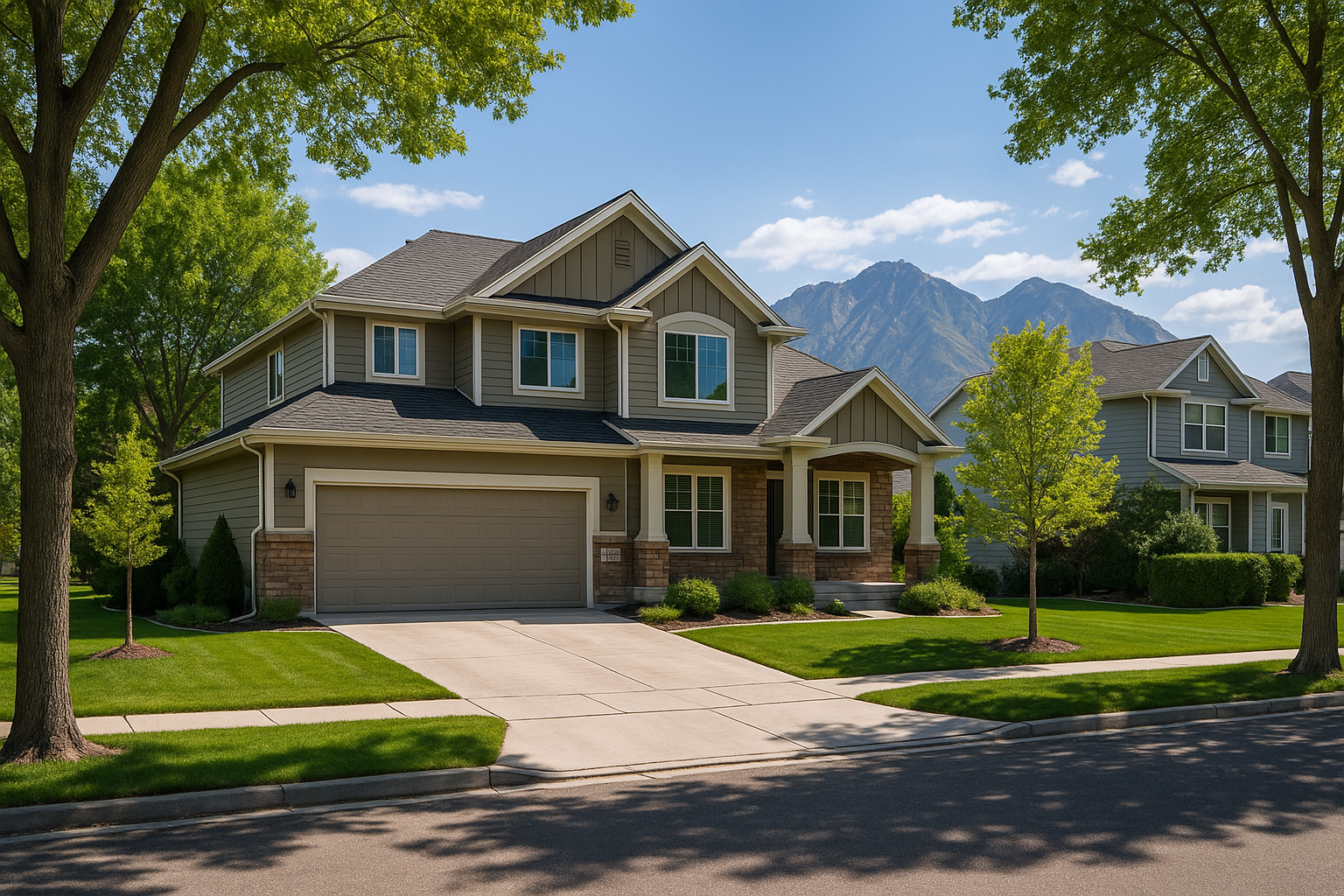
Davis County Utah Home Prices 2026 Forecast — What's Changed and What's Coming
Davis County home prices have risen sharply over the past three years, but the pace of appreciation is moderating heading into 2026. The median home price in Davis County currently sits in the $475,000–$510,000 range, depending on city and property type, with Kaysville and Farmington commanding premium prices while Layton and South Davis cities offer more accessible entry points. For 2026, most indicators point to continued modest appreciation in the 3–5% range — not the double-digit surges of 2021–2022, but a steady, fundamentally sound market driven by persistent inventory shortages and strong in-migration from Salt Lake County and out-of-state buyers. If you're a buyer, seller, or investor trying to get ahead of this market, this post breaks down exactly where prices are, how they got here, and what credible data suggests is coming next.
What Are Home Prices in Davis County Right Now?
As of mid-2025, Davis County remains one of the most competitive submarkets in the Wasatch Front. Here's a city-by-city snapshot of what buyers are encountering:
- Farmington: Median prices hovering near $530,000–$560,000, driven by Station Park proximity, top-rated schools, and newer construction in Farmington Fields and surrounding developments.
- Kaysville: One of the county's most desirable ZIP codes, with medians frequently pushing $540,000–$590,000 for single-family homes with acreage.
- Layton: The county's largest city by population keeps prices slightly more accessible — median near $455,000–$490,000 — making it a top target for Hill AFB military families and first-time buyers.
- Bountiful: South Davis's anchor city sits near $460,000–$495,000 median, with strong demand from Salt Lake County buyers seeking more square footage per dollar.
- Centerville and Woods Cross: Smaller inventory, consistent demand, medians in the $440,000–$475,000 range.
According to data tracked through the National Association of REALTORS®, metro areas like Salt Lake City–Provo–Orem continue to show price resilience well above national averages, and Davis County benefits directly from that regional pressure. David Supinger, MDM, CNE, CLHMS and Broker/Owner of HomeClick Real Estate with over 33 years of experience and 1,300+ homes sold across the Wasatch Front, tracks these numbers neighborhood by neighborhood — not just at the county level.
What Caused Davis County Home Prices to Rise So Fast?
The surge from 2020 through 2023 wasn't random. Several forces converged simultaneously in Davis County specifically:
- Hill AFB expansion and job growth: The Air Force base is one of the largest employers in Utah and brings a continuous stream of relocating families who need housing quickly. The Hill AFB corridor — stretching through Layton, Roy, and Clinton — saw some of the most intense buyer competition during peak years.
- In-migration from California, Nevada, and Idaho: Remote work allowed buyers from higher-cost states to cash out equity and buy larger homes in Davis County at what felt like a discount — even as local prices climbed.
- Chronic inventory shortage: Davis County has significant geographic constraints. The Great Salt Lake to the west and the Wasatch Range to the east squeeze buildable land, keeping supply perpetually tight.
- Interest rate psychology: When rates were near 3%, buyers stretched budgets. When rates rose to 7%+, existing homeowners locked into low mortgages stopped selling — further strangling inventory.
Understanding these structural drivers matters because they don't disappear in 2026. They evolve. Buyers searching available listings right now at UtahFreeHomeSearch.com can see firsthand how limited active inventory remains across most Davis County cities.
Are Davis County Home Prices Going to Drop in 2026?
This is the question David Supinger hears most from buyers sitting on the sideline. The short answer: a meaningful price correction in Davis County for 2026 is unlikely. Here's why:
The county simply doesn't have the oversupply problem that precedes most price corrections. Months of supply — a key indicator — has remained well below the 6-month threshold that signals a balanced market. At current absorption rates, Davis County is still functioning as a seller's market in most price bands, even with elevated interest rates reducing buyer pool size.
That said, the days of 15% year-over-year appreciation are behind us for this cycle. The 2026 forecast from most credible analysts, including data from HUD.gov's housing outlook reports, suggests that Utah's major metros — including Davis County — are positioned for measured, sustainable growth rather than volatility in either direction. Buyers who are waiting for a crash may be waiting through another 4–6% appreciation cycle.
What Is the Foreclosure Situation in Davis County?
Foreclosure activity in Davis County remains historically low, which is another factor suppressing distressed inventory. Unlike correction cycles in 2008–2010, today's homeowners hold substantially more equity, and unemployment in the Salt Lake metro remains near record lows. For buyers hoping to find deeply discounted foreclosure opportunities, the current environment doesn't support that strategy.
If you are navigating a distressed property situation as a seller or need to understand Utah foreclosure timelines and processes, the Utah State Courts website provides detailed information on judicial and non-judicial foreclosure procedures in Utah. David Supinger has guided clients through complex distressed transactions and short sales and can explain your options clearly — call 801-698-2526 for a no-pressure conversation.
Which Davis County Cities Offer the Best Value in 2026?
Value is relative to your goals, but based on price-per-square-foot metrics, school ratings, commute access, and long-term appreciation trends, here are the cities worth watching:
- Layton continues to offer the best balance of space, amenities, and relative affordability in the county — particularly in the Hill Field Road and 1200 East corridors.
- Syracuse and Clinton attract buyers looking for newer construction with more square footage for the price, though both are seeing faster appreciation as demand catches up.
- Bountiful remains a value play for Salt Lake County commuters — shorter commute times with lower price points than Holladay or Sugar House equivalents.
- Fruit Heights is a small, often-overlooked community with excellent schools and a quiet neighborhood character that punches above its size in long-term holding value.
As a Wall Street Journal Top 250 agent ranked #189 nationally, David Supinger brings a data-driven perspective to neighborhood-level analysis that generic real estate platforms simply can't replicate. With 33+ years working specifically in Utah markets, his insight into which neighborhoods are gaining momentum before the market prices it in is a genuine advantage for clients.
Should I Buy in Davis County Now or Wait Until 2026?
If you're financially ready — stable income, adequate down payment, and a plan to stay 3+ years — waiting rarely works in your favor in a supply-constrained market like Davis County. Every month of waiting has historically meant paying more, not less, for comparable homes in this region.
The smarter move is to get into the market strategically: understand your price band, identify neighborhoods where supply occasionally loosens, and move quickly when the right property appears. Start your search now at UtahFreeHomeSearch.com — it's a free, full MLS search tool built specifically for Utah buyers, with no registration walls or spam calls.
When you're ready to talk strategy with a local expert, David Supinger and his team at HomeClick Real Estate are available to walk you through current market data, neighborhood comparisons, and negotiation positioning. Reach out directly at 801-698-2526.
Frequently Asked Questions: Davis County Utah Home Prices 2026 Forecast
- What is the average home price in Davis County, Utah in 2025?
- The median home price in Davis County currently ranges from approximately $455,000 to $560,000 depending on the city. Kaysville and Farmington sit at the higher end of the range, while Layton, Bountiful, and the South Davis cities offer more accessible price points. Prices vary significantly by bedroom count, lot size, and proximity to Hill AFB or major employment corridors.
- Will Davis County home prices drop in 2026?
- A significant price drop in Davis County for 2026 is considered unlikely by most market analysts. The county faces structural inventory constraints due to geography, strong in-migration, and low foreclosure rates. The forecast is for modest appreciation of 3–5% annually — a normalization from pandemic-era surges rather than a correction. Buyers waiting for a crash may find themselves priced out further.
- Is Davis County a good place to buy a home compared to Salt Lake County?
- Davis County offers competitive value relative to Salt Lake County, particularly in cities like Bountiful, Layton, and Kaysville. Buyers typically get more square footage and land for comparable price points, with access to top-rated schools and shorter commutes to Hill AFB. The tradeoff is slightly less urban walkability in most areas, though Farmington's Station Park district has changed that calculus meaningfully.
- How does the Hill AFB housing market affect Davis County home prices?
- Hill Air Force Base is one of the most significant economic drivers in Davis County, consistently bringing in relocating military families who need housing on tight timelines. This creates year-round demand regardless of seasonal cycles. The Layton, Roy, and Clinton areas closest to the base tend to see the most direct impact, with faster absorption rates and less price negotiating room compared to more distant parts of the county.
- What is the best city in Davis County to buy a home for long-term appreciation?
- Historically, Kaysville and Farmington have delivered strong long-term appreciation due to limited inventory, high school ratings, and desirable neighborhood character. For buyers seeking the best current value with strong upside, Layton and Syracuse offer competitive price-per-square-foot metrics with infrastructure and development trends pointing toward continued demand growth through 2026 and beyond.
About David Supinger
David Supinger is a Certified Luxury Home Marketing Specialist (CLHMS), Resort and Second Home Property Specialist (RSPS), and Certified Negotiation Expert (CNE). Wall Street Journal Top 250 agent. Broker/Owner HomeClick Real Estate, 33+ years, 1,300+ homes sold. 801-698-2526 | vipluxuryteam.com