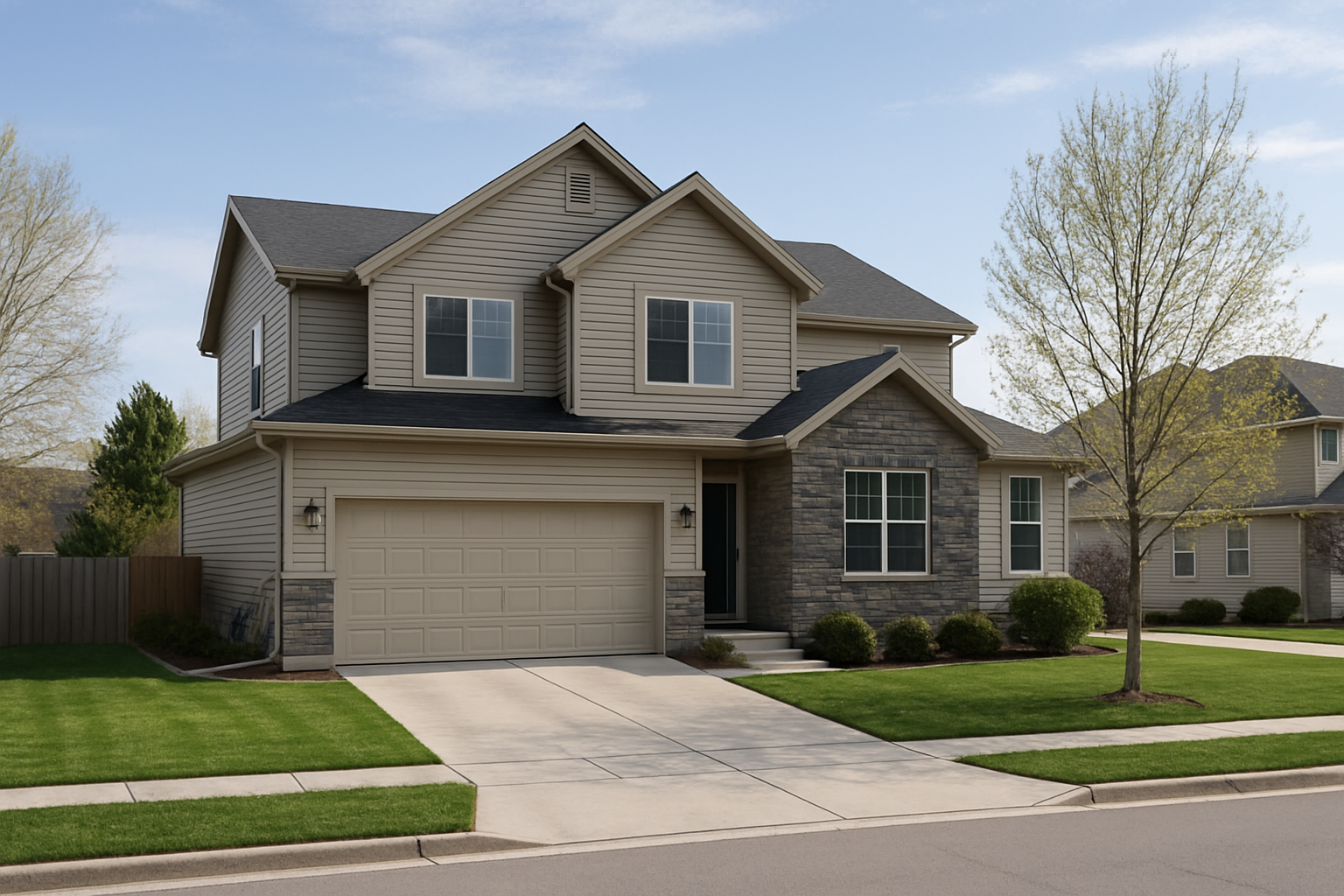
Bank-Owned Homes in Utah 2026 — REO Buyer's Complete Guide
Bank-owned homes in Utah — also called REO (Real Estate Owned) properties — are homes that have completed the foreclosure process and are now owned directly by a lender, government agency, or servicer. In 2026, REO inventory in Utah remains a genuine opportunity for buyers willing to do their homework, navigate a non-traditional purchase process, and move decisively when the right property surfaces. This guide walks you through exactly how REO purchases work in Utah, what to expect, and how to position yourself to compete successfully.
What Exactly Is a Bank-Owned or REO Property?
When a homeowner stops making mortgage payments and the lender forecloses, the property goes to a trustee sale. If no bidder at that auction meets the lender's minimum price, the lender takes title to the home. At that point the property becomes "Real Estate Owned" — REO — and the bank, credit union, or government-backed entity becomes the seller. Common REO sellers in Utah include traditional banks, credit unions, HUD.gov (for FHA-insured loans), Fannie Mae, Freddie Mac, and the FDIC when a financial institution has failed.
REO properties are distinct from pre-foreclosure short sales and from properties sold at the trustee sale itself. With an REO, the lender has already absorbed the loss of foreclosure, cleared the junior liens in most cases, and is now motivated to liquidate the asset from its books. That motivation can create real pricing opportunities — but it also comes with unique contract terms, as-is conditions, and timelines that differ significantly from a standard resale transaction.
Why Are REO Homes in Utah Still Worth Pursuing in 2026?
Utah's housing market remains competitive, particularly along the Wasatch Front corridor from Bountiful through Layton and into the Davis County communities near Hill AFB. While inventory has improved modestly compared to the historically tight years of 2021–2023, well-priced homes still move quickly. REO properties often appear at a slight discount to market value — the lender wants them off the books — and they frequently surface in neighborhoods where traditional inventory is thin.
According to research published by the National Association of REALTORS®, distressed property sales including REOs consistently represent a segment of the market where prepared buyers find value that is difficult to locate in standard listings. In Davis County specifically — Farmington, Kaysville, Layton, and Bountiful — REO homes come to market sporadically but generate strong buyer interest when they do. Being ready before one lists is the difference between getting the home and missing it entirely.
How Does the REO Purchase Process Work in Utah?
Purchasing an REO in Utah follows a defined sequence that differs from a typical private-party sale. Here is what buyers should expect:
- Property listed by an asset manager or listing broker. The lender assigns the property to a listing broker who markets it on the MLS, sometimes with a brief quiet-marketing period first. You can search current REO and bank-owned listings at UtahFreeHomeSearch.com — the site pulls live MLS data and is free to use with no registration wall.
- Offer submitted on the lender's addendum. Nearly every institutional seller — HUD, Fannie Mae, banks — requires buyers to use their own contract addendum layered on top of Utah's standard REPC. These addenda heavily favor the seller and limit buyer remedies. Read them carefully before signing.
- As-is condition, no repairs. REO sellers do not make repairs. They will not credit for deferred maintenance found during inspection. Your inspection is for your own knowledge and walk-away decision only.
- Extended closing timelines possible. Asset managers are often out of state. Approval, counter-offers, and closing documents can move slowly. Build flexibility into your schedule and financing lock periods.
- Title issues may exist. Although lenders typically deliver clear title, it is critical to purchase an owner's title insurance policy. Some REO properties carry complications from the foreclosure process that a careful title search will surface.
Understanding Utah's foreclosure legal framework also matters for buyers. The Utah State Courts website provides public access to judicial foreclosure case records and can help buyers or their attorneys verify that a foreclosure was properly completed before closing on an REO purchase.
How Is an REO Different From a Short Sale?
Buyers sometimes confuse REO properties with short sales, but they are fundamentally different transactions. A short sale occurs before foreclosure — the homeowner is still on title and negotiating with their lender to accept less than the mortgage balance. An REO sale occurs after foreclosure — the lender already owns the property outright.
Short sales typically take longer to close due to lender approval requirements, and they carry their own negotiation complexity. If you are weighing both paths, David Supinger — REO Specialist Certified and Broker/Owner of HomeClick Real Estate with 33+ years of experience — recommends buyers understand the distinction clearly before pursuing either. For those specifically navigating short sale transactions, the Certified Short Sale Expert program is a recognized credentialing body that trains agents in that specialized process.
What Should REO Buyers in Davis County Know Before Making an Offer?
Davis County buyers — particularly those targeting Farmington, Kaysville, Layton, and Bountiful — should keep several local realities in mind when pursuing REO properties:
Competition is real. REO listings that are priced correctly in Davis County commonly receive multiple offers within the first few days. Having your financing fully underwritten — not just pre-qualified — before you submit gives your offer credibility an asset manager will notice.
Know your rehab budget before you bid. Most REO homes need work. Vacant homes sitting through a Utah winter can have freeze damage, plumbing issues, and deferred maintenance that adds up quickly. Bring a contractor for a walkthrough during the inspection period and get real numbers before you are committed.
HUD homes have specific rules. HUD-owned properties are sold through the HUD.gov portal with owner-occupant priority bid periods. Investors cannot bid during the initial exclusive period. David Supinger, who served as an NLB Listing Broker for HUD, FDIC, and Fannie Mae, knows these programs inside and out — the nuances of bidding strategy and asset management expectations are not something a generalist agent will typically understand at the same level.
Escalation clauses often don't work on REO. Institutional sellers commonly reject or ignore escalation clauses. Submit your highest and best offer upfront. Ask your agent what the asset manager's pattern has been on similar properties.
How Do You Find Bank-Owned Homes in Utah Right Now?
The most reliable way to find current REO and bank-owned listings in Utah is through the MLS. Government agency portals — HUD's HomeSore, Fannie Mae's HomePath — list their own inventory directly, but the MLS remains the broadest source. Start your search at UtahFreeHomeSearch.com, which provides a clean, free interface to the full Utah MLS database. Set up alerts for your target neighborhoods so you see new REO listings the moment they hit.
Working with an agent who has direct REO experience is equally important. David Supinger has closed 1,300+ homes in 33+ years of practice, was recognized as a Wall Street Journal Top 250 Agent nationally (ranked #189), and holds REO Specialist Certification. His background as an NLB Listing Broker — actually managing REO disposition for government agencies — means he understands what asset managers want to see in an offer, how to communicate with out-of-state decision-makers, and how to get deals closed when the paperwork gets complicated. Reach him directly at 801-698-2526 to discuss active inventory and current opportunities.
Frequently Asked Questions: Bank-Owned Homes in Utah 2026
Are bank-owned homes always cheaper than regular listings in Utah?
Not always, but they frequently offer value. Lenders price REO properties to move, and the as-is condition often means the list price reflects anticipated repair costs. In a competitive market like Davis County, the discount can be modest — but the combination of negotiable price and motivated seller still creates opportunity for buyers who are prepared.
Can I get an FHA loan to buy a bank-owned home in Utah?
Yes, in many cases. HUD-owned homes are specifically designed to accommodate FHA financing. For non-HUD REO properties, FHA financing is possible if the property meets FHA's minimum condition standards. If the home has significant damage or habitability issues, FHA 203(k) rehabilitation loans or conventional renovation financing may be more appropriate.
Do REO sellers in Utah pay closing costs or make concessions?
Some do, and some don't. HUD and Fannie Mae have specific programs that allow for closing cost assistance in certain circumstances. Private bank REO sellers vary widely. Your offer strategy should account for what the asset manager is likely to accept — an experienced REO agent can advise you based on the specific seller and current market conditions.
What happens if I find major problems during the inspection of an REO home?
REO sellers will not make repairs, but you retain the right to walk away during your inspection period. Your earnest money protection depends on the specific contract and addendum terms. Review the seller's addendum with your agent and, if appropriate, a Utah real estate attorney before you sign anything. The inspection period is your primary risk-mitigation tool in an as-is transaction.
How long does it take to close on a bank-owned home in Utah?
Closing timelines on REO properties typically range from 30 to 60 days, though government-owned properties like HUD homes have more defined timelines. Asset manager response times vary — delays are common when decision-makers are out of state or managing large portfolios. Build buffer time into your financing lock and any lease obligations you need to coordinate around.
This information is for educational purposes only and does not constitute legal or financial advice. Consult a licensed Utah attorney or financial adviser for guidance specific to your situation.
About David Supinger
David Supinger is REO Specialist Certified with 17+ years REO experience. NLB Listing Broker for HUD, FDIC, Fannie Mae. Broker/Owner HomeClick Real Estate, 33+ years. 801-698-2526 | utahfreehomesearch.com