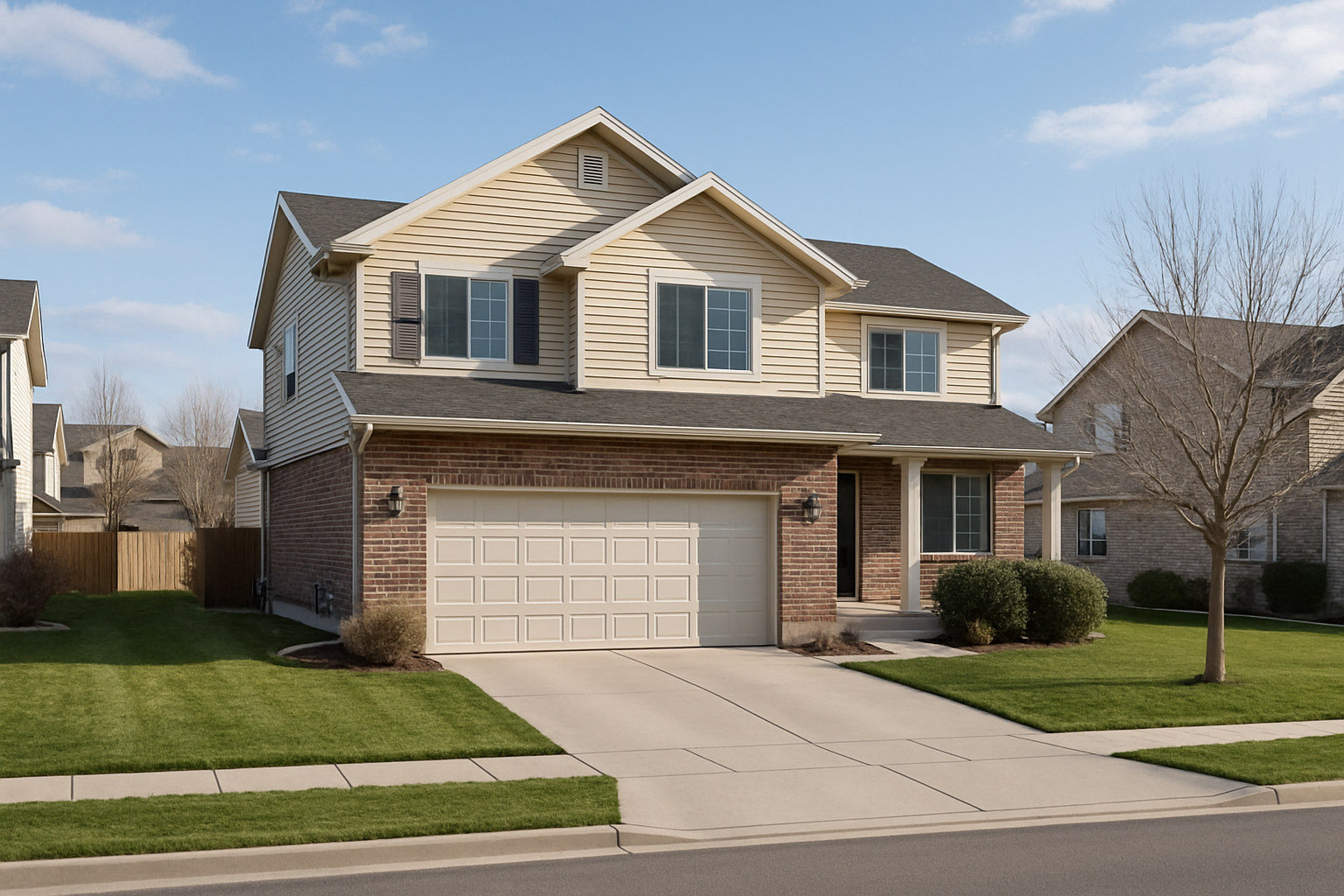
Bank-Owned Homes in Utah 2026 — REO Buyer's Complete Guide
Bank-owned homes in Utah — also called REO (Real Estate Owned) properties — are homes that have completed the foreclosure process and reverted to the lender's ownership. In 2026, REO inventory in Davis County and along the Wasatch Front represents a genuine opportunity for prepared buyers: prices are often below market, sellers are motivated institutions, and terms can move quickly when you know how the process works. This guide walks you through everything you need to buy an REO property in Utah with confidence.
What Exactly Is a Bank-Owned or REO Home?
When a homeowner defaults on their mortgage and the property goes through foreclosure, the lender attempts to sell it at a trustee's sale. If no buyer bids a sufficient amount at auction, the lender — typically a bank, credit union, or a government-sponsored entity like Fannie Mae — takes title to the property. That property is now "Real Estate Owned," or REO, and sits on the lender's books as a non-performing asset.
REO properties are different from pre-foreclosure or short sale situations. With an REO, the original homeowner is gone, title is clear of the previous mortgage debt, and you are negotiating directly with the asset management team, servicer, or listing agent representing the institution. For buyers who want to avoid the uncertainty of an occupied distressed property, bank-owned homes can be a cleaner entry point into the distressed market.
David Supinger, REO Specialist Certified and Broker/Owner of HomeClick Real Estate, has spent more than 17 years working REO dispositions across Northern Utah, including serving as a National Listing Broker (NLB) for HUD.gov, the FDIC, and Fannie Mae. He has brokered more than 1,300 homes over a 33-year career and has been recognized as a Wall Street Journal Top 250 agent, ranked #189 nationally. His experience on both the listing and buying side of REO transactions gives buyers a significant strategic advantage.
How Does the REO Foreclosure Process Work in Utah?
Utah is primarily a non-judicial foreclosure state, which means lenders can foreclose through a trustee's sale process without going through the court system, though judicial foreclosure is also available. The timeline from default notice to trustee's sale can be as short as 111 days, making Utah's process relatively fast compared to many states. Buyers researching the legal side of Utah foreclosure should review current statutes through Utah State Courts, where public records and procedural guidelines are maintained.
Once a property reverts to the bank after a failed trustee's sale, the lender assigns it to an asset management company or a certified REO broker for listing and disposition. In Davis County communities like Kaysville, Farmington, Layton, and Bountiful — areas heavily influenced by the Hill AFB employment corridor — REO properties can move quickly because buyer demand remains strong even when distressed inventory rises.
What Are the Advantages of Buying a Bank-Owned Home in Utah?
REO properties carry a distinct set of advantages that appeal to first-time buyers, investors, and move-up buyers alike:
- Clear title: The foreclosure process extinguishes the prior mortgage, so you're not inheriting the previous owner's loan balance or most junior liens.
- Vacant possession: Most REO homes are vacant and available for immediate occupancy or renovation, unlike occupied short sales or pre-foreclosures.
- Motivated institutional sellers: Banks and agencies want non-performing assets off their books. Pricing is typically set to sell within a defined window.
- Inspection access: Unlike trustee's sale purchases, most REO transactions allow a standard inspection period, giving buyers the ability to conduct due diligence.
- Financing eligibility: Many REO homes qualify for conventional, FHA, or VA financing — especially HUD-owned properties listed through the HUD HomeStore program.
At the same time, REO properties are sold as-is. Deferred maintenance is common, utilities may have been off for extended periods, and cosmetic damage is expected. Buyers should factor repair costs into their offer strategy.
How Do You Find Bank-Owned Homes in Davis County and Northern Utah?
The most efficient way to find current REO listings in Farmington, Kaysville, Layton, Bountiful, and surrounding communities is to search the live MLS, where most bank-owned and government-owned homes are listed. UtahFreeHomeSearch.com provides free, real-time MLS access so you can filter by price, city, and property status without creating an account or being pestered by automated calls. Bookmark it as your starting point for daily REO searches.
Beyond the MLS, David Supinger's background as a former National Listing Broker for HUD, FDIC, and Fannie Mae means he has direct institutional contacts and understands how each agency prices, negotiates, and processes offers — knowledge that isn't available through a national aggregator or generic search portal.
What Should You Know Before Making an Offer on an REO Property?
REO transactions follow different rules than traditional home purchases. Understanding these before you write an offer saves time and avoids costly mistakes:
- Use the seller's addendum: Institutional sellers require their own purchase addenda, which override standard REPC language in several areas. These addenda are non-negotiable in most cases — your agent must know how to work within them.
- Get pre-approved, not just pre-qualified: Asset managers review offers with financing contingencies skeptically. A full underwriting pre-approval from a Utah-licensed lender strengthens your position substantially.
- Understand AS-IS clauses: The seller will not make repairs. Your inspection is for your information only. Price your offer with known or likely repair costs already factored in.
- Counter-offer timelines are rigid: Banks operate on committee approval cycles. Expect 24–72 hour response windows and have your earnest money ready to wire immediately upon acceptance.
- Title insurance is essential: Even with a clear REO title, obtain an owner's title insurance policy. Redemption rights, IRS liens, and HOA claims can occasionally survive foreclosure.
David Supinger has negotiated hundreds of REO offers across Davis County on behalf of buyers, and he regularly advises clients on how to structure competitive offers within institutional constraints. You can reach him directly at 801-698-2526 to discuss any active listing you're evaluating.
Is Buying a HUD Home Different From a Standard Bank REO?
Yes — and the difference matters. HUD homes are properties where the Federal Housing Administration insured the mortgage, the borrower defaulted, and HUD acquired the property after paying the insurance claim to the lender. HUD lists and sells these homes through its own online bidding system at HUD.gov, with a priority bidding period for owner-occupant buyers before investors can submit offers.
As a former NLB Listing Broker for HUD.gov, David Supinger understands the HUD bidding platform, required HUD-approved closing agents, and FHA 203(k) renovation financing options that can be layered onto HUD purchases needing significant repair. This expertise is rare among general practitioners and gives buyers a measurable edge in the HUD marketplace.
If you're also exploring short sale alternatives to REO purchases, the Certified Short Sale Expert program provides a useful framework for understanding how distressed sale timelines and negotiations differ between the two property types.
What Does the Utah REO Market Look Like in 2026?
According to data tracked by the National Association of REALTORS®, distressed property share nationally has remained modest but is showing measured increases as pandemic-era mortgage forbearance protections have fully wound down and interest rate pressures stress some leveraged homeowners. In Davis County specifically, the Hill AFB corridor communities — Layton, Clearfield, Clinton, and Syracuse — have historically shown resilience due to stable federal employment, but pockets of distressed inventory do cycle through.
David Supinger monitors Davis County REO activity closely and can alert qualified buyers when new institutional listings hit the market before broader public awareness. For buyers willing to act quickly and accept as-is conditions, 2026 represents a reasonable entry window in select price bands. Start your property search at UtahFreeHomeSearch.com and call 801-698-2526 to get on David's early-notification list.
Frequently Asked Questions: Bank-Owned Homes in Utah 2026
- Q: Can I use FHA financing to buy a bank-owned home in Utah?
-
Yes, in most cases. FHA financing is eligible for REO properties that meet minimum property condition standards. HUD-owned homes are specifically designed to accommodate FHA buyers. However, properties in poor condition may require FHA 203(k) rehabilitation loans or an escrow holdback arrangement, depending on the lender's guidelines.
- Q: Are bank-owned homes always cheaper than traditional listings?
-
Not always, but they are often priced at or slightly below market to facilitate a defined sale timeline. The real savings may come through negotiated price reductions after inspection reveals deferred maintenance, or through below-market list pricing set by asset managers working against quarterly disposition targets. Compare any REO listing carefully against recent sold comps.
- Q: How long does it take to close on an REO property in Utah?
-
Closing timelines vary by institution. Some banks close in as few as 20–30 days when buyers use approved title companies and bring strong financing. Government-owned properties, including HUD homes, typically target 30–45 day closings. Delays often stem from title clearance issues or slow internal approval chains, not from buyers — having an experienced REO agent helps manage those bottlenecks proactively.
- Q: Do I need a real estate agent to buy a bank-owned home in Utah?
-
Technically no, but practically yes. Institutional sellers require offers to be submitted through their own platforms or listing brokers. An experienced buyer's agent — particularly one with REO transaction background like David Supinger — knows how to navigate addenda, earnest money requirements, and asset manager communication protocols that most buyers would find opaque and frustrating without guidance.
- Q: What happens if the bank-owned home has HOA debt or unpaid property taxes?
-
Unpaid property taxes typically survive foreclosure and remain a lien on title — the buyer or the transaction must address them at closing. HOA debt treatment depends on Utah statute and the specific HOA's lien position. This is one of several reasons why obtaining owner's title insurance on every REO purchase is strongly recommended. Your title company will identify these obligations during the title search process.
This information is for educational purposes only and does not constitute legal or financial advice. Consult a licensed Utah attorney or financial adviser for guidance specific to your situation.
About David Supinger
David Supinger is REO Specialist Certified with 17+ years REO experience. NLB Listing Broker for HUD, FDIC, Fannie Mae. Broker/Owner HomeClick Real Estate, 33+ years. 801-698-2526 | utahfreehomesearch.com